7.9
rating
Ludopedia
7.5
rating
BGG
Our Verdict
RECOMMENDED
If you love fast decisions and cards that do it all, Hamburg will hook you; the dice‑driven threat system and multi‑use cards keep the pace lively.
Highlights
- Card versatility
- Dynamic threat management
- Solid solo mode
Keep in mind
- Moderate learning curve
- Dice luck factor
Rules manual not indexed yet
Upload the PDF rulebook to ask questions about this game with AI.
About the game
What you do in a play session
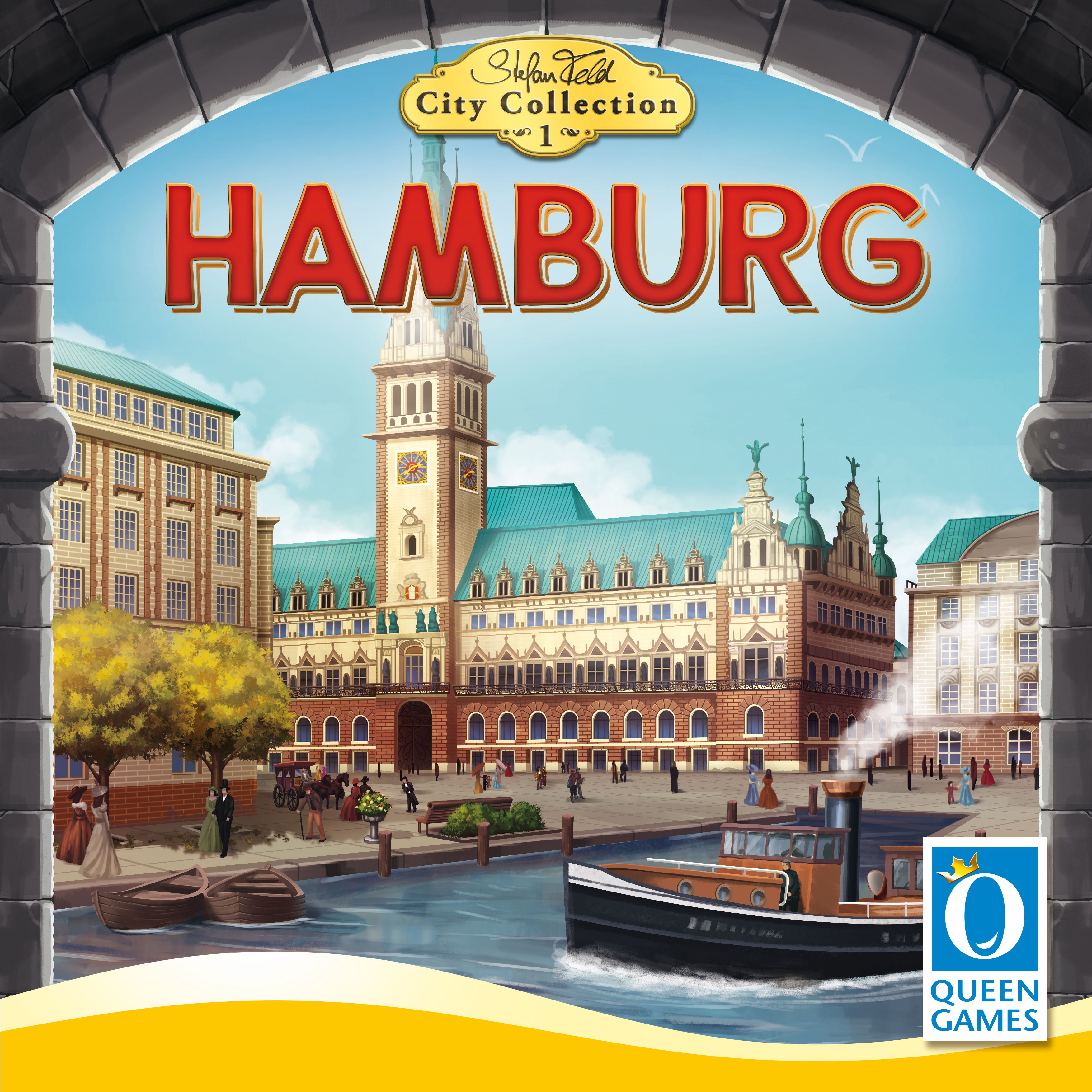
Hamburg puts you in the shoes of a late‑19th‑century mayor of the bustling German port city. The game unfolds over eight rounds; at the start of each round six colored dice are rolled. Any die showing a 5 or 6 gives you a threat marker of that colour, while the black die acts as a wild, revealing a hidden threat type on its back. Accumulating three of the same threat triggers a penalty, so risk management is constant. After the roll you may spend coins – equal to the total pips of all dice that showed 1 or 2 – to move forward on the mayor track, gaining benefits throughout the game. The black die also activates the clergy of St. Michael’s Church, which serves as a round counter and awards points for certain buildings at game end.
On your turn you select five cards from any of the five coloured stacks. Each card belongs to one of thirteen categories representing neighborhoods and iconic locations of Hamburg, and each card offers five possible uses: building the city wall, activating boats (when a die shows 3 or 4), starting a building plot, placing a building on that plot – which may grant new abilities or end‑game scoring conditions – and other thematic actions. This versatility forces you to decide quickly which function yields the most value at the moment.
Throughout the game you earn points for a variety of achievements: controlling threats, developing specific areas, and bonuses for being the sole player to meet one of the five round conditions. After eight rounds, the highest score wins. Hamburg is essentially a refined reimplementation of Bruges, incorporating The City on the Zwin and Pets expansions plus rule tweaks that smooth the flow. If you enjoy multi‑use card games, hand management, and a dash of dice‑driven luck, this title offers a strategic, thematic experience that captures the buzz of a growing city.
On your turn you select five cards from any of the five coloured stacks. Each card belongs to one of thirteen categories representing neighborhoods and iconic locations of Hamburg, and each card offers five possible uses: building the city wall, activating boats (when a die shows 3 or 4), starting a building plot, placing a building on that plot – which may grant new abilities or end‑game scoring conditions – and other thematic actions. This versatility forces you to decide quickly which function yields the most value at the moment.
Throughout the game you earn points for a variety of achievements: controlling threats, developing specific areas, and bonuses for being the sole player to meet one of the five round conditions. After eight rounds, the highest score wins. Hamburg is essentially a refined reimplementation of Bruges, incorporating The City on the Zwin and Pets expansions plus rule tweaks that smooth the flow. If you enjoy multi‑use card games, hand management, and a dash of dice‑driven luck, this title offers a strategic, thematic experience that captures the buzz of a growing city.
Gallery
Box and component photos
Tap any photo to open fullscreen. Photos submitted by the community or publisher.
Rules videos
Learn by watching before you open the box
Best player count
BGG community vote
1
OK
2
REC
3
BEST
4
REC
5
OK
Soundtrack
Ambience suggested by Melodice
Loading playlist...
Where to Buy
Prices monitored daily
Finding best prices...
Prices unavailable at this time.
Price history — last 6 months (lowest new offer)
Alert enabled!
Join the BoardGamesBot deals group
Get the best board game deals every day — without message spam.
Join the WhatsApp groupGame details
Mechanics, categories, families and credits
Mechanics
Categories
Families
Publisher
Queen Games, Evrikus, Moon3 Inc., White Goblin Games
Designer
Stefan Feld
Artist
Christian Fiore, Fiore GmbH
Community
Data from BoardGameGeek
Frequently Asked Questions
Quick answers before you buy
How long does a game usually take?
Typically 60–90 minutes, depending on player count and familiarity with the rules.
What is the player count?
1 to 5 players; the solo mode is fully supported.
Is it suitable for beginners?
The multi‑use card system has a learning curve, so it’s best for players with some hand‑management experience.
What components are included?
Multi‑use cards, six colored dice, threat markers, coin tokens, mayor track, St. Michael’s Church board, and internal trays for storage.
Is the game thematic or abstract?
Very thematic – you really feel like you’re shaping 19th‑century Hamburg.
Other Games You'll Like
Based on mechanics and theme