Maharaja — Prices
The Avalon Hill Game Co, Descartes Editeur · Board game · 1994
3–5 · best 3
240 min
Weight 2.7/5
Buy · from US$ 25.12
7.6
rating
Ludopedia
6.2
rating
BGG
Our Verdict
RECOMMENDED
Perfect for history buffs and influence game lovers who enjoy secret planning. The tension of simultaneous reveals is the highlight!
Highlights
- Secret planning creates great surprises
- Rich and immersive historical theme
- Variable powers add strategic depth
- Great area majority competition
Keep in mind
- Playtime can be quite long
- Moderate initial learning curve
Rules manual not indexed yet
Upload the PDF rulebook to ask questions about this game with AI.
About the game
What you do in a play session
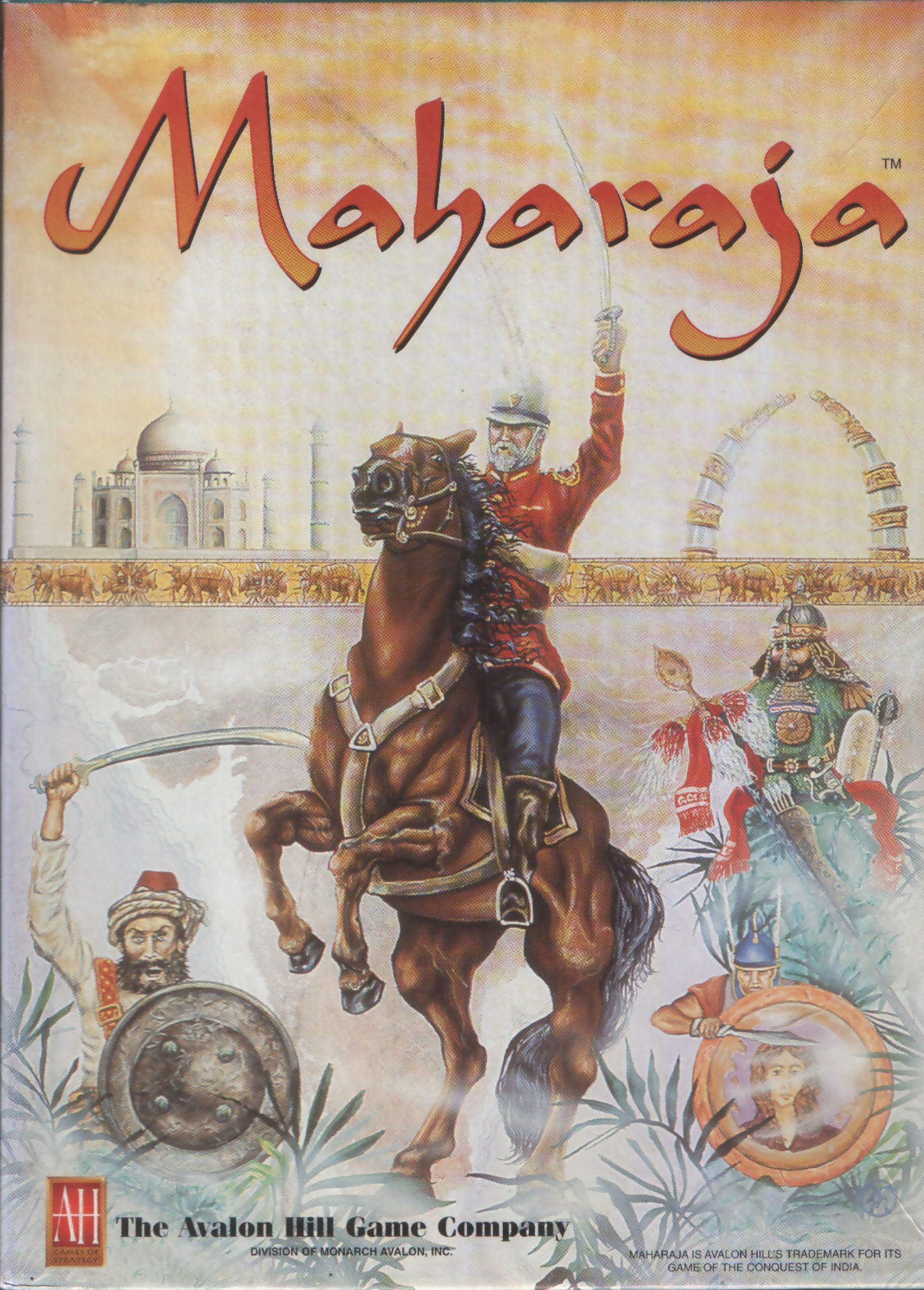
Maharaja is the kind of game that transports you to India on an epic journey spanning millennia. If you're familiar with the classic Britannia, you'll feel right at home, as the system is very similar, but here the scale is monumental: covering everything from the Aryan invasions in 1500 BC to the establishment of the British Raj in the 19th century. The map is vast, stretching from the foothills of the Himalayas to the island of Sri Lanka, creating a perfect setting for those who love history and long-term strategy.
However, there's also the modern take by masters Kramer and Kiesling! In this version, the vibe shifts toward something more competitive and spiritual. You take on the role of a priest trying to expand the worship of your favorite deity. The goal? Build statues and shrines across various Indian cities to impress the Maharaja. The game operates on secret planning: everyone decides their actions simultaneously, creating a tense atmosphere of surprise when cards are revealed. You'll be assisted by characters with unique abilities to optimize your movements and score more points.
The core dynamic revolves around the Maharaja's visit, as the great king changes his residence annually. If you hold the most influence where the king resides, the rewards are generous. The new edition introduced visual improvements, new characters that can even disrupt the turn order, and modular rules for those who want to add an extra layer of complexity. Whether you're a general simulating historical wars or a priest vying for divine prestige, the game demands planning, resource management, and a bit of cunning to secure the final victory.
However, there's also the modern take by masters Kramer and Kiesling! In this version, the vibe shifts toward something more competitive and spiritual. You take on the role of a priest trying to expand the worship of your favorite deity. The goal? Build statues and shrines across various Indian cities to impress the Maharaja. The game operates on secret planning: everyone decides their actions simultaneously, creating a tense atmosphere of surprise when cards are revealed. You'll be assisted by characters with unique abilities to optimize your movements and score more points.
The core dynamic revolves around the Maharaja's visit, as the great king changes his residence annually. If you hold the most influence where the king resides, the rewards are generous. The new edition introduced visual improvements, new characters that can even disrupt the turn order, and modular rules for those who want to add an extra layer of complexity. Whether you're a general simulating historical wars or a priest vying for divine prestige, the game demands planning, resource management, and a bit of cunning to secure the final victory.
Gallery
Box and component photos
Tap any photo to open fullscreen. Photos submitted by the community or publisher.
Best player count
BGG community vote
3
BEST
4
BEST
5
OK
Soundtrack
Ambience suggested by Melodice
Loading playlist...
Where to Buy
Prices monitored daily
Finding best prices...
Prices unavailable at this time.
Price history — last 6 months (lowest new offer)
Alert enabled!
Join the BoardGamesBot deals group
Get the best board game deals every day — without message spam.
Join the WhatsApp groupGame details
Mechanics, categories, families and credits
Mechanics
Categories
Families
Publisher
The Avalon Hill Game Co, Descartes Editeur
Designer
Craig Sandercock, Rex A. Martin
Artist
Charles Kibler, Kurt Miller, Stephen Langmead
Community
Data from BoardGameGeek
1,197owners
62wishlist
16want to play
Frequently Asked Questions
Quick answers before you buy
Is the game very long?
Yes, especially the wargame version, which can take about 4 hours. Brew some coffee and clear your afternoon!
Do I need to know Indian history to play?
It's not mandatory, but it helps with immersion. The game teaches the dynamics as you play.
How many people can play?
The classic version supports 3 to 5 players, while the new edition allows 1 to 4.
Is it a complex game?
It has a medium weight (2.67 on BGG). It's not a gateway game, but nothing impossible for someone who already plays a few board games.
What's in the box?
Depending on the version, you'll find detailed maps, action cards, influence markers, and in the modern version, statues and shrines.
Who do you recommend it for?
For those who enjoy area control, strategy, and like trying to predict their opponent's next move.
Other Games You'll Like
Based on mechanics and theme