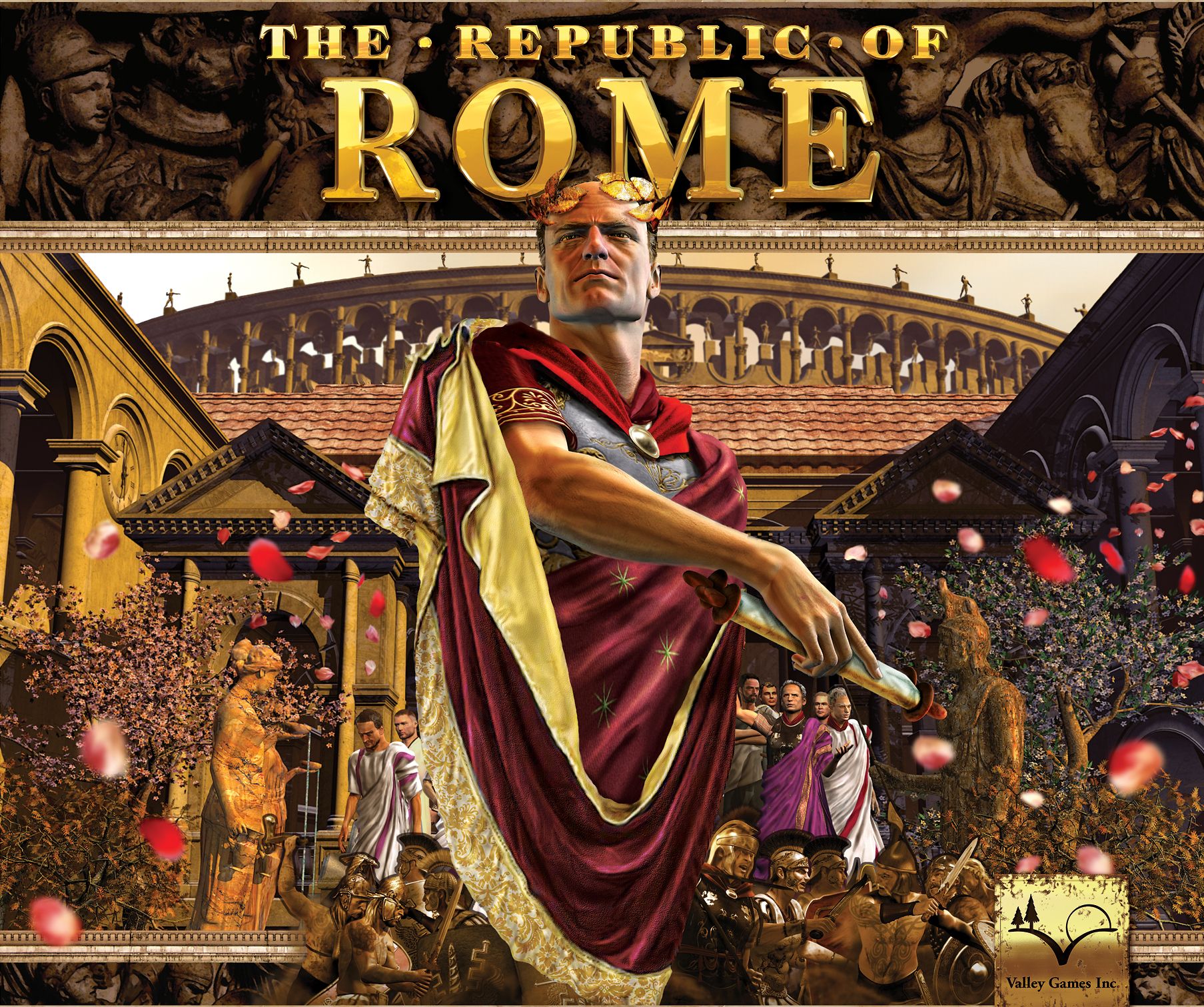
The Republic of Rome
The Avalon Hill Game Co, Valley Games, Inc., Descartes Editeur · Board game · 1990
1–6 · best 5
Solo
300 min
Weight 4.4/5
Buy · from US$ 43.95
7.4
rating
Ludopedia
7.5
rating
BGG
Our Verdict
RECOMMENDED
If you love dirty politics and marathon games, The Republic of Rome will hook you for hours.
Highlights
- Deep historical immersion
- Intense negotiation
- Varied mechanics
Keep in mind
- Long playtime
- Steep learning curve
Rules manual not indexed yet
Upload the PDF rulebook to ask questions about this game with AI.
About the game
What you do in a play session
The Republic of Rome brings over two and a half centuries of Roman history to the tabletop as a semi‑cooperative strategy game. Each player commands one of the powerful Republican families, vying for Senate offices, military commands, economic concessions and new followers. Decisions are made through Senate proposals—only those holding offices can propose, and voting power comes from the number and influence of recruited senators. While trying to make your faction the strongest, the group must keep external crises (wars, famine, unrest) from toppling Rome; if the Republic falls, everyone loses. The game blends once‑around auctions, bribery, dice rolls with critical hits/failures, hand management, and voting, all flavored by event cards that appear throughout the play. Playtime can stretch to five hours, and the complexity is high, demanding attention to multiple fronts at once. A solo mode is available, using rules that simulate opponents. In short, The Republic of Rome offers a deep immersion into Roman politics where diplomacy, negotiation, and military strategy intertwine in a tense, rewarding experience.
Gallery
Box and component photos
Tap any photo to open fullscreen. Photos submitted by the community or publisher.
Rules videos
Learn by watching before you open the box


Best player count
BGG community vote
1
OK
2
OK
3
OK
4
REC
5
BEST
6
BEST
Soundtrack
Ambience suggested by Melodice
Loading playlist...
Where to Buy
Prices monitored daily
Finding best prices...
Prices unavailable at this time.
Price history — last 6 months (lowest new offer)
As an Amazon Associate I earn from qualifying purchases. Prices and availability subject to change.
Alert enabled!
Join the BoardGamesBot deals group
Get the best board game deals every day — without message spam.
Join the WhatsApp groupGame details
Mechanics, categories, families and credits
Mechanics
Categories
Families
Publisher
The Avalon Hill Game Co, Valley Games, Inc., Descartes Editeur, Edge Entertainment, Phalanx Games Deutschland, Wargames Club Publishing
Designer
Don Greenwood, Richard Berthold, Robert Haines
Artist
Charles Kibler, Dave Dobyski, George I. Parrish, Jr., Kurt Miller, Mark Poole, Patrick Turner
Community
Data from BoardGameGeek
6,532owners
1,683wishlist
352want to play
Frequently Asked Questions
Quick answers before you buy
How long does a typical game take?
Usually between 4 and 5 hours, though it can run longer with more players or a slower group.
What is the ideal player count?
The game supports 1‑6 players, but 3‑5 tends to provide the best balance of negotiation and playtime.
Is it beginner‑friendly?
The complexity is high; it’s best suited for players already comfortable with heavy strategy or political games.
What components are included?
A map of Rome, senator and proposal cards, influence tokens, dice, resource markers, general miniatures, and a thick rulebook.
Is there a solo mode?
Yes, solo rules let one player face an automated opponent using event cards and AI tables.
Other Games You'll Like
Based on mechanics and theme