8.3
rating
Ludopedia
7.8
rating
BGG
Our Verdict
If you love games that make you think for hours and build an empire from scratch, Through the Ages is right up your alley! It's a classic that rewards strategic planning.
Highlights
- Deep strategy
- Impeccable resource management
- Civilization development
- High replayability
- Impactful decisions
Keep in mind
- Steep learning curve
- Long playtime
- Unforgiving of mistakes
HIGHLY RECOMMENDED
Learn How to Play Step by Step
Check out our interactive rules guide and exclusive illustrated infographic.
Access Rules Guide
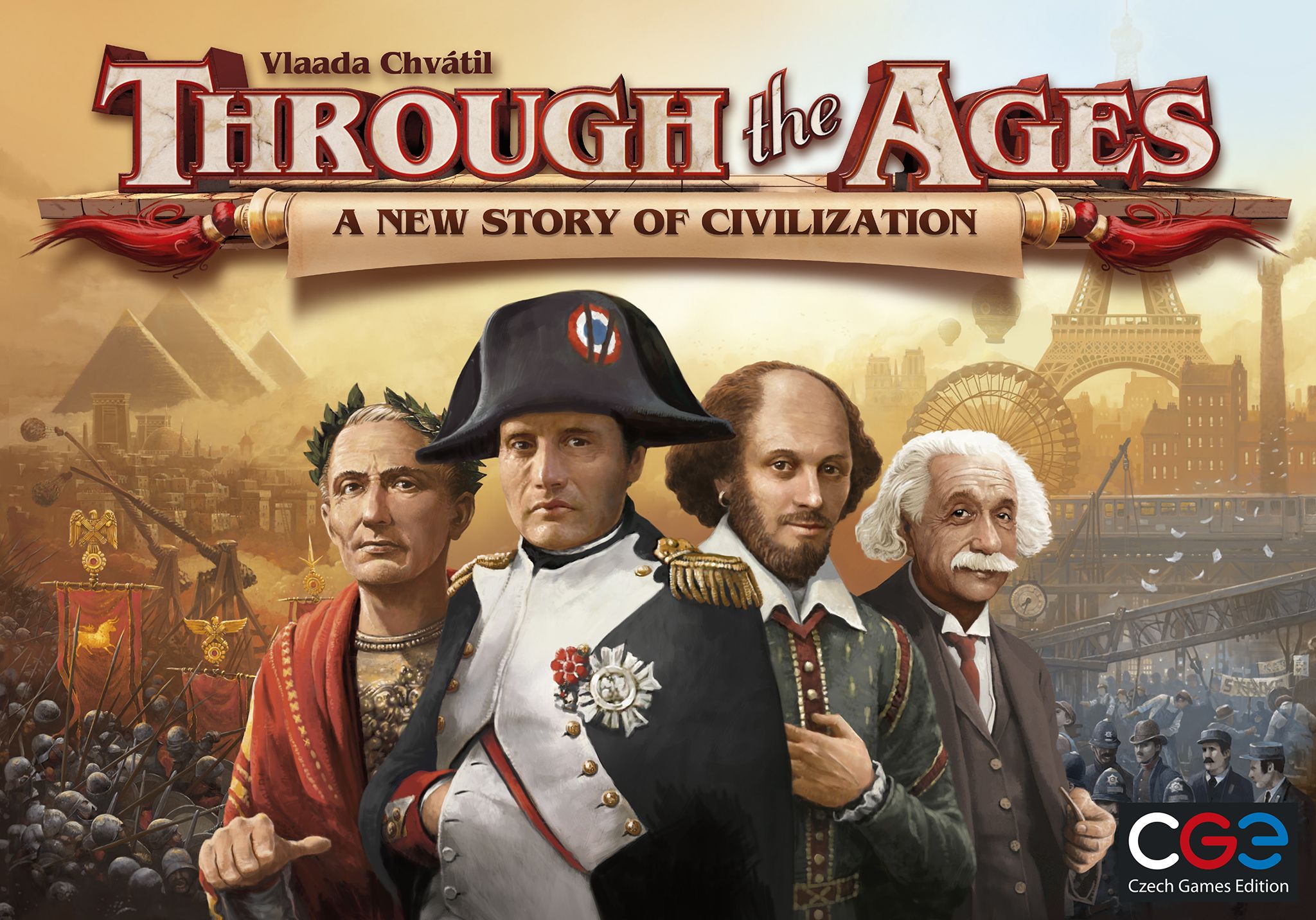
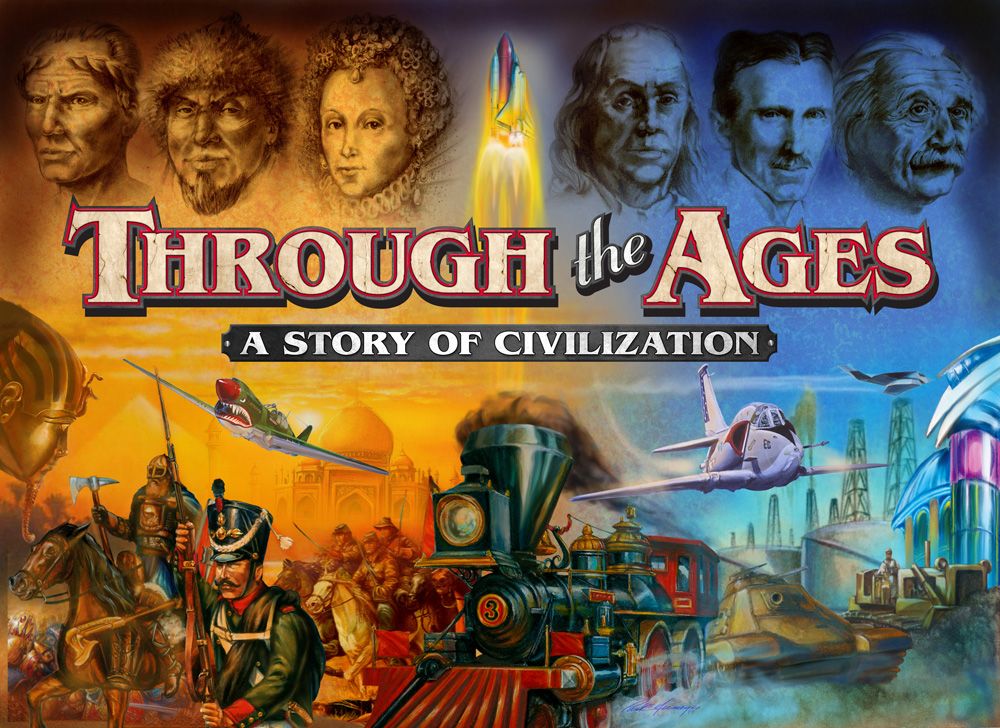
Hey there, epic challenge enthusiasts! Through the Ages: A Story of Civilization puts you in charge of a civilization, from antiquity to modern times. Your goal? To build the most culturally rich nation, outperforming your rivals in every aspect. The game is a masterclass in resource management, where every decision matters. You'll need to balance discovering new technologies with electing influential leaders, building era-defining wonders, and maintaining a respectable military. Neglecting any of these areas can be an invitation for your opponents to take advantage of you. One of the central mechanics is card drafting, where technologies, wonders, and leaders become available and easier to draft the longer they remain on the board. To use a technology, it's not enough to simply discover it with science; you need food to sustain the population that will operate it and ore to build the necessary structures. And don't think you can ignore the military side! A weak army is an easy target. While there's no map to lose territory, players with more military power can raid your resources, steal science, eliminate leaders, or even your population and culture. It's quite difficult to win by brute force alone, but it's very easy to lose by not having it. The ultimate victory goes to whoever accumulates the most culture points by the end of the modern age. Get ready to think hard and plan every step, because here, every age is a new chance to shape history!
GALLERY
12 photos · from the community
Tap any photo to open fullscreen. Photos submitted by the community or publisher.
In English
2
REC
3
BEST
4
REC
Finding best prices...
Prices unavailable at this time.
Price history — last 6 months (lowest new offer)
Mechanics
Categories
Families
Publisher
Czech Board Games, Czech Games Edition (CGE), DiceTree Games, Eagle-Gryphon Games, HomoLudicus, IELLO
Designer
Vlaada Chvátil
Artist
Paul Niemeyer, Richard Cortes
How many players can play Through the Ages?
The game is designed for 2 to 4 players, offering a different experience depending on the number of people at the table.
What is the average playtime for a game?
Prepare for a longer session! A game of Through the Ages typically lasts between 120 and 180 minutes, and can extend a bit more with inexperienced players.
Is it a complex game for beginners?
Yes, Through the Ages is considered a highly complex game (BGG weight of 4.18/5). It has a significant learning curve and is more suitable for experienced players or those willing to invest time to learn its many nuances.
Do I need a lot of table space to play?
Yes, the game has many components, such as individual player boards, resource tracks, and a card display. It's good to have a spacious table to comfortably accommodate everything.
Is there much player interaction?
Absolutely! Interaction is constant, whether through competing for cards in the draft, vying for wonders, or, most notably, through the threat and execution of military actions against weaker civilizations. Keep an eye on your opponents!
What is the ultimate goal of the game?
The goal is to accumulate the most culture points by the end of the Modern Age. These points are generated in various ways throughout the game, such as through buildings, leaders, wonders, and events.
Does the game rely heavily on luck?
While there is an element of luck in card revelation, Through the Ages is predominantly a game of strategy and planning. Hand management, action optimization, and the ability to adapt to situations are far more important than luck.