
/pic7402296.jpg)
What is your question about Village: Big Box?
Ask before downloading the manual: the assistant was trained on this file and answers instantly, citing the exact page.
Ask questions about the game
Ask anything about Village: Big Box: rules, setup, components, complexity, price, or whether it fits your group.
Write your question first. You will create your free account to see the answer — it takes 20 seconds.
Full rulebook
Browse the manual or download the original PDFFull manual text available to read Open text
60
4
A
D
B
F I
G
C
E
H
I
3
1
3
5
4
2 2
3 2
4
3
2
6
3
4
1
4
6
5
2 2
4 3
4
3
6
4
5
1
5
7
5
2 3
4 4
5
3
6
6
1
7
8
7
3 4
6 4
6
6
4
5
3030606030
1.a
2. 3.
1|2|4
2
2-5
J
Life in this village is tough! But at least, it offers its residents a lot of room for development. Some spend their career in the council chamber,
some in the church, while others journey into the world. Each player represents the head of a family that wants to rise to prominence.
However, the most important thing to remember is: Time cannot be stopped. Eventually, family members pass away.
Players will have to work hard to increase their family’s fame and thus gain prestige points.
When the end of the game is triggered, the player with the most prestige points wins the game and is immortalized in the village chronicle.
55 family members
(11 red, 11 yellow, 11 blue,
11 white, 11 purple)
4 monks
(black)
5 life time track tokens
(1 red, 1 yellow, 1 blue,
1 white, 1 purple)
1 starting player marker
1 next starting player
marker
25 coins
30 disc markers
(6 red, 6 yellow, 6 blue, 6 white, 6 purple)
5 point track tokens
(1 red, 1 yellow, 1 blue, 1 white, 1 purple)
(the 12th with a number 1 is for the Marriage expansion only)
60 goods tiles
(12 scrolls, 12 horses, 12 plows, 12 oxen, 12 wagons)
24 customer tiles
5 point tiles
(1 red, 1 yellow, 1 blue,
1 white, 1 purple)
25 bags of grain
132 influence cubes
(33 Brown, 33 Pink,
33 Orange, 33 Green)
6 plague cubes
(black)
front back
1 mass overview card
(back is for solo mode)
(the 7th cube is for the Marriage expansion)
(an additional one for Port)
5 farmyards
(1 red, 1 yellow, 1 blue,
1 white, 1 purple)
4 base game setup cards
(for 2, 3, 4, and 5 players)
(backs are for the Marriage expansion)
2 bags
(1 black, 1 green)
1 village chronicle
A) market
B) crafts
C) travel
D) council chamber
E) graveyard
F) church
G) family
H) well
I) grain harvest
J) village chronicle
1 double-sided game board
4
AA
D
B
F I
GG
C
E
H
22
33
22
22
33
1144
22
33
44
22
33
44
33
55 2
44
33
66
11
44
66
55
22
44
44
33
66
55
11
55
77
55
22 33
44 44
55
33
66
66
11
77
88
77
33 44
66 44
66
66
44
55
6030
1.a
2. 3.1|2|4 2222
2-52-5
J
Life in this village is tough! But at least, it offers its residents a lot of room for development. Some spend their career in the council chamber,
some in the church, while others journey into the world. Each player represents the head of a family that wants to rise to prominence.
When the end of the game is triggered, the player with the most prestige points wins the game and is immortalized in the village chronicle.
(1 black, 1 green)
church
grain harvest
village chronicle
Page 2
Goal of the game
Components
55 family members
(11 red, 11 yellow, 11 blue,
11 white, 11 purple)
4 monks
(black)
5 life time track tokens
(1 red, 1 yellow, 1 blue, 1 white, 1 purple)
1 starting player marker
1 next starting player marker
25 coins
30 disc markers
(6 red, 6 yellow, 6 blue, 6 white, 6 purple)
5 point track tokens
(1 red, 1 yellow, 1 blue, 1 white, 1 purple)
(the 12th with a number 1 is for the Marriage expansion only)
60 goods tiles
(12 scrolls, 12 horses, 12 plows, 12 oxen, 12 wagons)
24 customer tiles
5 point tiles
(1 red, 1 yellow, 1 blue,
1 white, 1 purple)
25 bags of grain
132 influence cubes
(33 Brown, 33 Pink,
33 Orange, 33 Green)
6 plague cubes
(black)
front back
1 mass overview card
(back is for solo mode)
(the 7th cube is for the Marriage expansion)
(an additional one for Port)
5 farmyards
(1 red, 1 yellow, 1 blue,
1 white, 1 purple)
4 base game setup cards
(for 2, 3, 4, and 5 players)
(backs are for the Marriage expansion)
2 bags
(1 black, 1 green)
1 village chronicle
A) market
B) crafts
C) travel
D) council chamber
E) graveyard
F) church
G) family
H) well
I) grain harvest
J) village chronicle
1 double-sided game board
---
1. Place the game board with the 4 suns (in the corners) in the middle of the table. It shows the village with its various areas and the prestige track on the right.
2. Each player chooses a color. Take the farmyard of your color and place it in front of you. Your farmyard is home to your family members, you may also store as many influence cubes, coins and goods tiles as you like on it. Each farmyard can only store a maximum of 5 bags of grain, however. Furthermore the life time track of your family can be found in the upper right of your farmyard.
3. Take the 11 family members (4x “1”, 3x “2”, 2x “3”, 2x “4”), the 6 disc markers, the life time track token and the point track token of your chosen color. Put your 4 family members with a “1” onto your farmyard. This is the first generation of your family. The 7 remaining family members are future generations. Since they are not born yet, set them aside in a general supply for now.
4. Put your life time track token on the life time track of your farmyard, into the space to the right of the quill. Put your point track token onto the sun (which is space “0” of the prestige track) in the lower right corner of the game board.
5. Give each player 1 coin, to place onto their farmyard. Place the remaining coins in a general supply next to the game board.
6. Shuffle the customer tiles face down and place them next to the market as a face down pile. Depending on the number of players, turn a certain number of tiles face up and add them to the market:
• in a 5- or 4-player game: put a tile on each of the 10 spaces
• in a 3-player game: the space labeled “4-5” remains empty
• in a 2-player game: the spaces labeled “3-5” and “4-5” remain empty.
7. Place the village chronicle nearby the graveyard next to the game board. If you play with less than 5 players, use family members of an unclaimed color to reduce the number of available spaces in the chronicle and the graveyard.
• in a 4-player game: put an unused family member on each space and grave labeled “5”
• in a 3-player game: put an unused family member on each space and grave labeled “4-5” or “5”
• in a 2-player game: put an unused family member on each space and grave labeled “3-5”, “4-5” or “5”
• in addition, if you do not play with the expansion Marriage the two spaces in the chronicle with the marriage icon are always covered with family members of an unclaimed color (or use the two pink family members from the Marriage expansion).
8. Place the next starting player marker on its designated space of the council chamber.
9. Place the 60 goods tiles (horses, oxen, wagons, plows, and scrolls) next to the game board as a general supply.
10. Place the 25 bags of grain, the influence cubes, and the 6 plague cubes next to the game board as a general supply. Also place the green bag nearby.
11. Put the 4 monks into the black bag and place it near the church.
12. Take the base game setup card (with the sun) that matches the number of players and place it nearby. Return the remaining setup cards to the game box. Also place the mass overview card near the game board.
13. The oldest player becomes the starting player and receives the starting player marker.
14. The following starting compensations are recommended:
• 1st player: Starting player marker
• 2nd player: 1 bag of grain
• 3rd player: 1 influence cube randomly determined (e.g., roling the die)
• 4th player: 1 influence cube selected from the supply
• 5th player: 1 (additional) coin
Life time track token
Family members
Bags of grain
Coins
Goods tiles
Influence cubes
---
The game is played over several rounds, during which you control the fate of your family members by placing them wisely in the village. They may give you prestige, influence, goods, or money depending on which profession you choose for them.
The different areas in the village allow for a variety of options. Each area has an associated action space where you can gain different types of influence and trigger certain actions.
In addition, many of these actions cost time. And just like in real life, the oldest family members eventually pass away. When a family member dies, their career choice determines whether they get a place in the village chronicle or not.
The game ends when either the village chronicle or the graveyard are fully occupied. At that point, you gain points for your family members in the different areas of the village. The player with the most prestige points wins.
Phase 1 - Seeding the action spaces
At the beginning of each round, seed the action spaces with influence cubes and plague cubes. The setup card shows how many different influence cubes you must take from the supply and add to the green bag at the beginning of a round. In addition, you must add all (6) available plague cubes to the bag.
Once the cubes are in the bag, mix them thoroughly. Then distribute a certain number of randomly drawn cubes onto each action space on the game board.
The number of cubes per action space is also shown on the setup card.
Playing a round
Phase 1 - Seeding the action spaces
Distribute a certain number of randomly drawn cubes.
Phase 2 - Take a cube and perform the action
Beginning with the starting player, players take turns carrying out actions.
Step 1: Take one influence or plague cube from an action space.
Step 2: You may perform the action of the chosen action space.
Phase 3 - End of a round
The mass is held at the end of every round.
Example for a 3-player game
Influence cubes and plague cubes
Influence cubes are required for performing certain actions in the village.
The following types of influence are available:
color: represents: is required for:
orange Skill crafts, travel
green Persuasiveness market, council chamber
brown Faith church, travel
pink Knowledge crafts, travel
black The black cubes are not a type of influence. They are plague cubes that reduce the life span of your family members.
The game is played over several rounds, during which you control the fate of your family members by placing them wisely in the village. They may give you prestige, influence, goods, or money depending on which profession you choose for them.
The different areas in the village allow for a variety of options. Each area has an associated action space where you can gain different types of influence and trigger certain actions.
In addition, many of these actions cost time. And just like in real life, the oldest family members eventually pass away. When a family member dies, their career choice determines whether they get a place in the village chronicle or not.
The game ends when either the village chronicle or the graveyard are fully occupied. At that point, you gain points for your family members in the different areas of the village. The player with the most prestige points wins.
Phase 1 - Seeding the action spaces
At the beginning of each round, seed the action spaces with influence cubes and plague cubes. The setup card shows how many different influence cubes you must take from the supply and add to the green bag at the beginning of a round. In addition, you must add all (6) available plague cubes to the bag.
Once the cubes are in the bag, mix them thoroughly. Then distribute a certain number of randomly drawn cubes onto each action space on the game board.
The number of cubes per action space is also shown on the setup card.
Playing a round
Phase 1 - Seeding the action spaces
Distribute a certain number of randomly drawn cubes.
Phase 2 - Take a cube and perform the action
Beginning with the starting player, players take turns carrying out actions.
Step 1: Take one influence or plague cube from an action space.
Step 2: You may perform the action of the chosen action space.
Phase 3 - End of a round
The mass is held at the end of every round.
Example for a 3-player game
Playing the game
Influence cubes and plague cubes
Influence cubes are required for performing certain actions in the village.
The following types of influence are available:
color: represents: is required for:
orange Skill crafts, travel
green Persuasiveness market, council chamber
brown Faith church, travel
pink Knowledge crafts, travel
black The black cubes are not a type of influence. They are plague cubes that reduce the life span of your family members.
carrying out actions Step 1 Take one influence or plague cube from an action space Step 2 You may perform the action of the chosen action space Phase 3 End of a round The mass is held at the end of every round Example for a 3 player game Playing the game Influence cubes and plague cubes Influence cubes are required for performing certain actions in the village The following types of influence are available color represents is required for orange Skill crafts travel green Persuasiveness market council chamber brown Faith church travel pink Knowledge crafts travel black The black cubes are not a type of influence They are plague cubes that reduce the life span of your family members
At the beginning of each round, seed the action spaces with influence cubes shows how many different influence cubes at the beginning of (6) available plague cubes to the bag. Then distribute a certain drawn cubes onto each action space on the game board. action space is also shown on the setup card.
Page 4
---
2
Example:
Chris takes a plague cube from the “grain harvest” action space.
He immediately returns the plague cube to the supply and moves his
marker on the life time track of his farmyard 2 spaces forward.
He may then perform the “grain harvest” action.
Step 2: Perform the action of the action space
You may then perform the action of the action space from which you took
the influence or plague cube. You are allowed to only take the cube and
not carry out the action.
Exception: If the cube is taken from the market space, a market day must
be held. (See “Market”, page 8.)
• Then, repeat steps 1 and 2 with the next player in clockwise order
until there are no more cubes on the action spaces.
Phase 3 - End of a round
When a player takes the last cube from the game board (i.e., all action
spaces are empty), they first may carry out their action as usual.
The current round is then finished and a mass is held.
(See “End of a round”, page 11.)
The new round starts again by filling the green bag with cubes and seeding
the action spaces.
Phase 2 - Take a cube and perform the action
Beginning with the starting player, players take turns carrying out actions:
Step 1: Take a cube from an action space
On your turn, you must take one influence or plague cube from an action
space of your choice.
Exception: You perform the substitute action. (See “Well”, page 10.)
If it is an influence cube, put it on your farmyard. (You may store any
number of influence cubes on your farmyard.)
If it is a plague cube, immediately return it to the supply and lose 2 time.
This means you must move your life time track token 2 spaces forward in
clockwise direction. (See “The ‘currency’ time” below.)
The “currency” time
Whenever you perform an action that costs time (every
hourglass represents one unit of time), you must move
your token on your life time track forward (clockwise)
the appropriate number of spaces.
In addition, you lose 2 time whenever you take a plague
cube.
As soon as your marker passes the quill, one of your oldest
family members passes away.
(See “A family member passes away”, page 12.)
Supply
2
Example:
Chris takes a plague cube from the “grain harvest” action space.
He immediately returns the plague cube to the supply and moves his
marker on the life time track of his farmyard 2 spaces forward.
He may then perform the “grain harvest” action.
Step 2: Perform the action of the action space
You may then perform the action of the action space from which you took
the influence or plague cube. You are allowed to only take the cube and
not carry out the action.
Exception: If the cube is taken from the market space, a market day must
be held. (See “Market”, page 8.)
• Then, repeat steps 1 and 2 with the next player in clockwise order
until there are no more cubes on the action spaces.
Phase 3 - End of a round
When a player takes the last cube from the game board (i.e., all action
spaces are empty), they first may carry out their action as usual.
The current round is then finished and a mass is held.
(See “End of a round”, page 11.)
The new round starts again by filling the green bag with cubes and seeding
the action spaces.
Phase 2 - Take a cube and perform the action
Beginning with the starting player, players take turns carrying out actions:
Step 1: Take a cube from an action space
On your turn, you must take one influence or plague cube from an action
space of your choice.
Exception: You perform the substitute action. (See “Well”, page 10.)
If it is an influence cube, put it on your farmyard. (You may store any
number of influence cubes on your farmyard.)
If it is a plague cube, immediately return it to the supply and lose 2 time.
This means you must move your life time track token 2 spaces forward in
clockwise direction. (See “The ‘currency’ time” below.)
The “currency” time
Whenever you perform an action that costs time (every
hourglass represents one unit of time), you must move
your token on your life time track forward (clockwise)
the appropriate number of spaces.
In addition, you lose 2 time whenever you take a plague
cube.
As soon as your marker passes the quill, one of your oldest
family members passes away.
(See “A family member passes away”, page 12.)
Supply
Page 5
---
If you have one or more family members on your farmyard, then you may perform a harvest action.
Immediately take 2 bags of grain from the supply and place them onto the appropriate spaces of your farmyard.
If you do not have any family members on your farmyard, then you cannot perform this action!
Take 3 bags of grain, if you own a horse and a plow in addition to your farming family members.
Take 4 bags of grain, if you own an ox and a plow in addition to your farming family members.
(You may never use more than one combination, i.e., several family members, plows, oxen, or horses are of no additional use during a harvest. Thus 4 bags of grain is the maximum you can take with a “grain harvest” action.)
Your goods are not used up during the harvest. For example, when using an ox and plow with the harvest, you do not need to discard them. Your family members remain on your farmyard as well.
This action represents a new family member being born. Immediately take one family member of your color from the general supply and add it to your farmyard. You must always take the family member with the lowest available number from your supply.
Important: Instead of taking a new family member from the supply, you may use this action to instead return one of your family members (not yet deceased) from the game board to your farmyard.
Example:
Chris has one family member with the number “2”, two with the number “3”, and two with the number “4” left in the supply. He must take the “2” family member.
Grain harvest Family
The actions
If you have one or more family members on your farmyard, then you may perform a harvest action.
Immediately take 2 bags of grain from the supply and place them onto the appropriate spaces of your farmyard.
If you do not have any family members on your farmyard, then you cannot perform this action!
Take 3 bags of grain, if you own a horse and a plow in addition to your farming family members.
Take 4 bags of grain, if you own an ox and a plow in addition to your farming family members.
(You may never use more than one combination, i.e., several family members, plows, oxen, or horses are of no additional use during a harvest. Thus 4 bags of grain is the maximum you can take with a “grain harvest” action.)
Your goods are not used up during the harvest. For example, when using an ox and plow with the harvest, you do not need to discard them. Your family members remain on your farmyard as well.
This action represents a new family member being born. Immediately take one family member of your color from the general supply and add it to your farmyard. You must always take the family member with the lowest available number from your supply.
Important: Instead of taking a new family member from the supply, you may use this action to instead return one of your family members (not yet deceased) from the game board to your farmyard.
Example:
Chris has one family member with the number “2”, two with the number “3”, and two with the number “4” left in the supply. He must take the “2” family member.
Grain harvest Family
This action represents a new family member being born. Immediately take one family member of your color from the general supply and add it to your farmyard. You must always take the family member with the lowest available number from your supply.
Important: Instead of taking a new family member from the supply, you may use this action to instead return one of your family members (not yet deceased) from the game board to your farmyard.
Page 6
---
This action allows you to produce 1 good in one of the five craft buildings.
(Take the corresponding goods tile and put it on your farmyard.)
Exception: At the mill, you get 2 coins instead.
There are two ways of producing a good. At each craft building (except the
mill), you may choose:
a) to pay for the produced good with time
(for this you also need a family member in the craft building);
OR
b) to pay for the produced good with influence cubes
(or bags of grain, depending on the good).
a) Acquire goods by spending time
If you want to pay for a good with time, you first need to train a family
member at the appropriate craft building. Place a family member from your
farmyard below the craft building that you want to use. This costs you a
certain amount of time: the number of hourglasses illustrated on the tree next
to it. You may then immediately produce the corresponding good by paying as
much time as indicated on the left of each craft building.
Your family member will remain below the same craft building for the rest of
the game (unless they die or return to the farmyard by means of the “family”
action). As long as they remain below the craft building, you may produce a
good again by means of the “crafts” action. In doing so, you now only pay as
much time as indicated on the left of the respective craft building (since your
family member is already trained).
Wainwright
a) Spend 2 time with a trained family
member to gain a wagon:
b) Pay 1 orange and 1 pink influence
cubes to gain a wagon:
Stables
a) Spend 3 time with a trained family
member to gain a horse or an ox:
b) Pay 3 bags of grain to gain a horse
or an ox:
Office
a) Spend 2 time with a trained family
member to gain a scroll:
b) Pay 1 pink influence cube to gain a scroll:
Smithy
a) Spend 3 time with a trained family
member to gain a plow:
b) Pay 1 orange and 1 pink influence
cubes to gain a plow:
Mill
No family members may be placed here.
Instead, pay 2 time and return 2 bags of
grain to the supply in exchange for 2 coins.
b) Acquire goods by paying with
influence cubes (or bags of grain)
Regardless of whether you have a family member below
a craft building or not, you may purchase the good that
the building produces by returning the specified amount
of influence cubes (or bags of grain at the stables) to
the supply. You do not need to have a family member
below the craft building. (In the example on the left,
Chris could have also acquired the wagon by returning
1 orange and 1 pink influence cube to the supply without
placing a family member and spending time.)
Overview of the costs in the different craft buildings:
Example:
Chris wants to build a wagon. He takes a family member from his
farmyard and places them below the wainwright (which costs him 2 time
for training as indicated on the tree) and produces the wagon (which costs
him another 2 time). He then takes a wagon from the supply and puts it on
his farmyard.
Crafts
This action allows you to produce 1 good in one of the five craft buildings.
(Take the corresponding goods tile and put it on your farmyard.)
Exception: At the mill, you get 2 coins instead.
There are two ways of producing a good. At each craft building (except the
mill), you may choose:
a) to pay for the produced good with time
(for this you also need a family member in the craft building);
OR
b) to pay for the produced good with influence cubes
(or bags of grain, depending on the good).
a) Acquire goods by spending time
If you want to pay for a good with time, you first need to train a family
member at the appropriate craft building. Place a family member from your
farmyard below the craft building that you want to use. This costs you a
certain amount of time: the number of hourglasses illustrated on the tree next
to it. You may then immediately produce the corresponding good by paying as
much time as indicated on the left of each craft building.
Your family member will remain below the same craft building for the rest of
the game (unless they die or return to the farmyard by means of the “family”
action). As long as they remain below the craft building, you may produce a
good again by means of the “crafts” action. In doing so, you now only pay as
much time as indicated on the left of the respective craft building (since your
family member is already trained).
Wainwright
a) Spend 2 time with a trained family
member to gain a wagon:
b) Pay 1 orange and 1 pink influence
cubes to gain a wagon:
Stables
a) Spend 3 time with a trained family
member to gain a horse or an ox:
b) Pay 3 bags of grain to gain a horse
or an ox:
Office
a) Spend 2 time with a trained family
member to gain a scroll:
b) Pay 1 pink influence cube to gain a scroll:
Smithy
a) Spend 3 time with a trained family
member to gain a plow:
b) Pay 1 orange and 1 pink influence
cubes to gain a plow:
Mill
No family members may be placed here.
Instead, pay 2 time and return 2 bags of
grain to the supply in exchange for 2 coins.
b) Acquire goods by paying with
influence cubes (or bags of grain)
Regardless of whether you have a family member below
a craft building or not, you may purchase the good that
the building produces by returning the specified amount
of influence cubes (or bags of grain at the stables) to
the supply. You do not need to have a family member
below the craft building. (In the example on the left,
Chris could have also acquired the wagon by returning
1 orange and 1 pink influence cube to the supply without
placing a family member and spending time.)
Overview of the costs in the different craft buildings:
Example:
Chris wants to build a wagon. He takes a family member from his
farmyard and places them below the wainwright (which costs him 2 time
for training as indicated on the tree) and produces the wagon (which costs
him another 2 time). He then takes a wagon from the supply and puts it on
his farmyard.
Crafts
Page 7
the stables to the supply You do not need to have a family member below the craft building In the example on the left Chris could have also acquired the wagon by returning 1 orange and 1 pink influence cube to the supply without placing a family member and spending time Overview of the costs in the different craft buildings Example Chris wants to build a wagon He takes a family member from his farmyard and places them below the wainwright which costs him 2 time for training as indicated on the tree and produces the wagon which costs him another 2 time He then takes a wagon from the supply and puts it on his farmyard Crafts Page 7
---
2
4
3
5
4
2
4
3
5
4
2
4
3
5
4
2
4
3
5
4
2
4
3
5
4
2
4
4
4
4
3
5
4
3
3
6
1
3
3
3
4
4
2
4
This action triggers a market day in which all players participate.
This action must be carried out. A market day must be held.
If you triggered the action, then you are the first player allowed to serve one
available customer. Available customers are all customers close to the stalls,
i.e., on spaces with blue borders. (The customers on the remaining 5 spaces
with brown borders are in the waiting line and cannot be served.)
Each customer wants certain goods and/or bags of grain. To serve the customer
you chose, return the required goods and/or the required amount of grain bags
to the supply, take the corresponding customer tile, and put it face down next
to your farmyard.
At the end of the game, this customer is worth the amount of
points printed on it.
Then – in clockwise order – the other players may serve
a customer. Each player may choose one of the remaining customers.
However, in addition to delivering the required goods and bags of grain, the
other players must also pay 1 green influence cube and 1 time. Players who
do not want to, or are unable to
pay and sell anything, must pass and may not
reenter the current market day later
.
When all players in clockwise order have had their chance to serve a customer,
a new sequence starts and all players who have not passed may serve another
customer. This time, however, everyone must pay 1 green influence cube
and 1 time. (Only the first sale of the “market day triggering player” is free.)
The market day continues for more sequences until all customers have been
served or all players have passed. The market day then ends.
Depending on the number of players, fill up the blue bordered spaces with
customers from the waiting line. The waiting customers are moved forward
in order. Then refill the waiting line with new customers from the pile.
(If no customers were served, all customer tiles remain in place.)
Julie does not own a horse and passes. Chris passes as well (as he does not own a horse anymore as well). This ends the market day.
Now the customers in the waiting line move up:
First the 3 spaces close to the stalls are filled
with the first 3 tiles from the waiting line.
Then the rest of the tiles in the waiting
line are moved forward.
Lastly the empty waiting line spaces are filled
with new customers from the pile.
Example: Market day in a 3-player game
Chris triggers the market day by taking the
influence cube from the “market” action
space.
He returns 1 horse and 1 plow to the supply, takes the corresponding customer tile and
puts it face down next to his farmyard. This
will give him 6 prestige points at the end of
the game.
It is now Julie’s turn. She wants to claim the tile
that requires 3 bags of grain. But first, she must
return 1 green influence cube to the supply and
pay 1 time. Then she returns her 3 bags of grain
to the supply and receives the corresponding
customer tile.
Oliver is up next. He has a scroll, but no bag of
grain and also no horse. He must therefore pass.
It is now Chris’s turn again. Unlike Oliver, he
has both a scroll and a bag of grain. To claim
the customer tile, he must first pay 1 green
influence cube and 1 time. He then returns
the scroll and the bag of grain to the supply
and receives the tile.
Market
2
4
3
5
4
2
4
3
5
4
2
4
3
5
4
2
4
3
5
4
2
4
3
5
4
2
4
4
4
4
3
5
4
3
3
6
1
3
3
3
4
4
2
4
This action triggers a market day in which all players participate.
This action must be carried out. A market day must be held.
If you triggered the action, then you are the first player allowed to serve one
available customer. Available customers are all customers close to the stalls,
i.e., on spaces with blue borders. (The customers on the remaining 5 spaces
with brown borders are in the waiting line and cannot be served.)
Each customer wants certain goods and/or bags of grain. To serve the customer
you chose, return the required goods and/or the required amount of grain bags
to the supply, take the corresponding customer tile, and put it face down next
to your farmyard. At the end of the game, this customer is worth the amount of
points printed on it. Then – in clockwise order – the other players may serve
a customer. Each player may choose one of the remaining customers.
However, in addition to delivering the required goods and bags of grain, the
other players must also pay 1 green influence cube and 1 time. Players who
do not want to, or are unable to pay and sell anything, must pass and may not
reenter the current market day later.
When all players in clockwise order have had their chance to serve a customer,
a new sequence starts and all players who have not passed may serve another
customer. This time, however, everyone must pay 1 green influence cube
and 1 time. (Only the first sale of the “market day triggering player” is free.)
The market day continues for more sequences until all customers have been
served or all players have passed. The market day then ends.
Depending on the number of players, fill up the blue bordered spaces with
customers from the waiting line. The waiting customers are moved forward
in order. Then refill the waiting line with new customers from the pile.
(If no customers were served, all customer tiles remain in place.)
Julie does not own a horse and passes. Chris passes as well (as he does not own a horse anymore as well). This ends the market day.
Now the customers in the waiting line move up:
First the 3 spaces close to the stalls are filled
with the first 3 tiles from the waiting line.
Then the rest of the tiles in the waiting
line are moved forward.
Lastly the empty waiting line spaces are filled
with new customers from the pile.
Example: Market day in a 3-player game
Chris triggers the market day by taking the
influence cube from the “market” action
space.
He returns 1 horse and 1 plow to the supply, 1 plow to the supply, 1 plow
takes the corresponding customer tile and
puts it face down next to his farmyard. This
will give him 6 prestige points at the end of
the game.
It is now Julie’s turn. She wants to claim the tile
that requires 3 bags of grain. But first, she must
return 1 green influence cube to the supply and
pay 1 time. Then she returns her 3 bags of grain
to the supply and receives the corresponding
customer tile.
Oliver is up next. He has a scroll, but no bag of
grain and also no horse. He must therefore pass.
It is now Chris’s turn again. Unlike Oliver, he
has both a scroll and a bag of grain. To claim
the customer tile, he must first pay 1 green
influence cube and 1 time. He then returns
the scroll and the scroll bag of grain to the supply
and receives the tile.
MarketMarket
5
4
3
3
3
3
4
to delivering the required goods and bags of grain, the
. Players who
pay and sell anything, must pass and may not
When all players in clockwise order have had their chance to serve a customer,
a new sequence starts and all players who have not passed may serve another
time, however, everyone must pay 1 green influence cube
and 1 time. (Only the first sale of the “market day triggering player” is free.)
market day continues for more sequences until all customers have been
number of players, fill up the blue bordered spaces with
waiting line. The waiting customers are moved forward
refill the waiting line with new customers from the pile.
Lastly the empty waiting line spaces are filled
It is now Chris’s turn again. Unlike Oliver, he
has both a scroll and a bag of grain. To claim
1 green
. He then returns
to the supply
Page 8
to serve a customer a new sequence starts and all players who have not passed may serve another time however everyone must pay 1 green influence cube and 1 time Only the first sale of the market day triggering player is free market day continues for more sequences until all customers have been number of players fill up the blue bordered spaces with waiting line The waiting customers are moved forward refill the waiting line with new customers from the pile Lastly the empty waiting line spaces are filled It is now Chris s turn again Unlike Oliver he has both a scroll and a bag of grain To claim 1 green He then returns to the supply Page 8
---
Council chamber
1st stage
2nd stage
3rd stage
4th stage
This action allows you to exert influence in the council chamber.
You may use this action in 3 different ways:
a) Take a family member from your farmyard and place them on the 1st stage of the council chamber track. This costs 1 time and 2 green influence cubes OR 1 time and 1 scroll.
You may perform the privilege action of this stage (to become the next starting player) which is depicted below the costs;
OR
b) Move one of your family members already on the council chamber track one stage forward (to the right). This also costs you either 1 scroll OR 2 green influence cubes and additionally, you must pay either 2 or 3 time depending on the stage. You may perform one privilege action which is shown below the costs either of the current or a previous stage of the family member just moved;
OR
c) If you already have at least one family member on the council chamber track, you may also perform a privilege action without moving a family member forward. In this case, simply perform one privilege action shown below the costs either of that family members current or a previous stage for free (not paying the costs shown at the top – thus, this only costs “the action”).
Overview of privileges:
1st stage: Take the next starting player marker (the ring) from the council chamber. If that marker has already been taken by another player, you receive nothing. If you have taken that marker, you will be the starting player in the next round. At the beginning of the next round, take the starting player marker and return the next starting player marker to its designated space on the roof of the council chamber.
2nd stage: Take 2 influence cubes of your choice from the supply and put them onto your farmyard. (They do not need to be the same color.)
3rd stage: Take 1 goods tile of your choice from the supply and put it on your farmyard.
4th stage: Pay exactly 1 coin to the supply in exchange for 3 prestige points on the prestige track.
There is no limit to the number of family members allowed on any stage.
At the end of the game, each family member that has reached at least the 2nd stage in the council chamber is worth prestige points.
(See “Final scoring”, page 14.)
Council chamber
1st stage
2nd stage
3rd stage
4th stage
This action allows you to exert influence in the council chamber.
You may use this action in 3 different ways:
a) Take a family member from your farmyard and place them on the 1st stage of the council chamber track. This costs 1 time and 2 green influence cubes OR 1 time and 1 scroll.
You may perform the privilege action of this stage (to become the next starting player) which is depicted below the costs;
OR
b) Move one of your family members already on the council chamber track one stage forward (to the right). This also costs you either 1 scroll OR 2 green influence cubes and additionally, you must pay either 2 or 3 time depending on the stage. You may perform one privilege action which is shown below the costs either of the current or a previous stage of the family member just moved;
OR
c) If you already have at least one family member on the council chamber track, you may also perform a privilege action without moving a family member forward. In this case, simply perform one privilege action shown below the costs either of that family members current or a previous stage for free (not paying the costs shown at the top – thus, this only costs “the action”).
Overview of privileges:
1st stage: Take the next starting player marker (the ring) from the council chamber. If that marker has already been taken by another player, you receive nothing. If you have taken that marker, you will be the starting player in the next round. At the beginning of the next round, take the starting player marker and return the next starting player marker to its designated space on the roof of the council chamber.
2nd stage: Take 2 influence cubes of your choice from the supply and put them onto your farmyard. (They do not need to be the same color.)
3rd stage: Take 1 goods tile of your choice from the supply and put it on your farmyard.
4th stage: Pay exactly 1 coin to the supply in exchange for 3 prestige points on the prestige track.
There is no limit to the number of family members allowed on any stage.
At the end of the game, each family member that has reached at least the 2nd stage in the council chamber is worth prestige points.
(See “Final scoring”, page 14.)
Page 9
---
Church Travel Supply
Example:
Chris wants to send a family member to the northern neighboring city.
He takes a family member from his farmyard and places them there. This
costs him 2 time as well as 1 wagon and 2 brown influence cubes, which
he returns to the supply. He then places one of his markers onto the city
and receives the city’s reward (3 prestige points on the prestige track).
This action allows you to send a family member out into the world. If you do
not have any family members on the travel map of the game board, then
take a family member from your farmyard and place that member on one of
the two neighboring cities that can be reached from the village.
You must pay the cost of the trip, shown on the path. You will certainly have
to pay 2 time and return 1 wagon to the supply. Additionally, depending on
which way you go, you will also have to return a certain number of influence
cubes to the supply. Take one of your markers and place it on the city traveled
to (left side). This gets you the reward shown on the city (right side).
There is no limit to the number of family members and different colored
markers allowed on any city.
At the end of the game, you will receive prestige points depending on the total
number of cities that your family visited during the game.
(See “Final scoring”, page 14)
With this action you may add one family member from your farmyard to
the black bag. For doing this, you must pay either 1 brown influence cube
(returned to the supply) OR 3 time.
Family members added to the black bag may be drawn and placed onto the
1st stage of the church track during a mass. A mass is held at the end of each
round as well as at the end of the game. (See “End of a round”, on the right.)
Instead of taking a cube from an action space, you may return 3 influence
cubes of the same color from your farmyard to the supply to carry out any
one of the previously listed actions.
This is incidentally the only way to perform a specific action when there is no
cube left on that corresponding action space.
If you already have at least one family member on a city on the travel map,
you can choose either:
• to send another family member from your farmyard to one of the two
neighboring cities;
OR
• to move 1 of your family members already on a city to an adjacent city.
Adjacent cities are all cities directly accessible via a path (without skipping
over another city). You must also pay the cost of this trip and put a marker
onto the city you reached.
You then receive the city’s reward (3 prestige points, 2 influence cubes of
your choice from the supply, or 1 coin).
Well (substitute action)
---
The current round is finished when a player takes the last cube from
the game board and carried out their action (or not) as usual.
Afterwards, a mass is held (also see the mass overview card):
Mass
Each mass consists of 3 steps:
1. Draw 4 pieces from the black bag
2. Move family members up in the church hierarchy
3. Award 2 prestige points for the church majority
1. Thoroughly shuffle the family members and monks in the black
bag. Then draw exactly 4 pieces from the bag, either at random or
deliberately by paying coins. Beginning with the starting player and
then continuing in clockwise order, each player may pick one or more
of their family members from the bag by paying 1 coin per family
member. (Since there are always 4 monks in the black bag, this is
the only way to make sure that your family members are drawn.)
Once a total of 4 family members have been bought from the bag,
no more pieces may be drawn. Should fewer than 4 family members
have been bought from the bag, bring the total count up to 4 pieces by
drawing the rest randomly.
As soon as you have drawn 4 pieces, if 1 or more monks were drawn
return them to the black bag. Place any drawn family members onto
the 1st stage of the church track. Family members that are still in the
bag remain there and might be drawn during the next mass.
2. After 4 pieces have been drawn from the black bag (even if they
were only monks), each player may move one or even several of
their family members up in the church hierarchy (i.e., moving them
one stage forward to the right on the church track).
Beginning with the starting player and then continuing in clockwise
order, each player may do this once. To move a family member to the
next stage (forward to the right), you must return as many bags of grain
to the supply as above each of the stages (the depicted bread may only
be paid instead when playing with the Marriage expansion).
Your family members may even move up more than one stage, provided you
pay the appropriate amount of grain bags to cover all the movement.
3. At the end of the mass, the player who has the most family members
on the church track immediately gains 2 prestige points on the prestige
track. In the case of a tie, the prestige points are awarded to the player
whose family member is on the furthest stage to the right (furthest
forward). If there is still a tie, then each of the tied players gains
2 prestige points. (It doesn’t matter on which stages the other family
members are located. Only the one furthest to the right is decisive.)
At the end of the game, each family member on the church track is worth prestige
points, depending on which stage they are. (See “Final scoring”, page 14.)
1st stage 2nd stage 3rd stage 4th stage
1st stage 2nd stage 3rd stage 4th stage
1st stage 2nd stage 3rd stage 4th stage
In a 3-player-game, Chris is the
current starting player when a mass
is held. He pays 1 coin and picks his
blue “2” family member from the
black bag.
Oliver also pays 1 coin and picks his
red “1” family member from the bag.
Julie does not want to pay to take her
family member out of the bag.
Therefore, Chris now brings the total number of pieces up to 4 by randomly
drawing 2 more pieces from the bag (one of which is Julie’s family member).
He then places the 3 colored family members on the 1st stage of the church track
and returns the monk to the black bag.
Now, starting with Chris, the players
may move their family members
forward. He returns 2 bags of grain
to the supply and moves his blue
“1” family member forward (to the
3rd stage). He then pays another bag of
grain and also moves his “2” family
member forward to the 2nd stage.
Oliver pays 4 bags of grain and
moves his red “2” family member
forward to the 4th stage.
Julie has no grain and therefore
cannot move up her family member.
Now 2 prestige points are awarded.
Even though Oliver and Chris have
the same number of family members
in the church, Oliver gains the
2 prestige points since he owns the
furthest forward family member.
---
The coins
You get coins at the mill or while traveling.
There are 3 possible ways to use coins:
1. To buy prestige points in the council chamber (at the 4th stage).
2. To ensure your family members are chosen from the black bag during a mass.
3. As a SUBSTITUTE for any one influence cube.
At the end of the game, each coin you did not spend is worth 1 prestige point.
(See “Final scoring”, page 14.)
During the game, you must often pay for actions with time by moving the token on your life time track forward in clockwise direction. Once you move the token past the quill, one of your oldest family members passes away. First finish your chosen action and then at the end of your turn, decide which of your oldest family members dies.
Exception: Anyone who moves their life time track token past the quill during a market day must immediately choose which of their family members dies.
Of your family members, it is always the one with the lowest number that has to die. If you have several family members with the lowest number, you can choose one of them.
A dying family member must be visible at the time of their death. This means that they must be either on the game board or on your farmyard, otherwise you do not lose a family member. Family members still in the black bag cannot die, nor can ones that have not yet entered play (from the supply).
A family member passes away
Beginning a new round
If a player has acquired the next starting player marker during the previous round, then they now take the starting player marker and return the next starting player marker to its designated space on the council chamber. Otherwise, the starting player remains the same.
The new round starts again by filling the green bag with cubes as shown on the setup card and seeding the action spaces.
For a dying family member, there is always one of two possibilities:
a) There is still a free space in the village chronicle
The village chronicle records the stories of the great residents and their deeds.
It has a few spaces open for each professional category.
Depending on where the family member “worked” at the time of their death, they are added to one of the following empty spaces:
At the end of the game, you receive prestige points depending on how many of your family members were immortalized in the village chronicle.
(See “Final scoring”, page 14.)
b) There is no proper space left in the village chronicle
In this case, the family member is placed onto one of the graves next to the church. Here they can rest in peace, but are not worth any prestige points.
Example for 3.:
If Chris wants to move his family member forward in the council chamber and needs to pay 2 green influence cubes, then he could also pay 1 coin and 1 green influence cube OR 2 coins.
Example:
Chris chooses the “crafts” action by taking a plague cube from the corresponding action space. He loses 2 time in doing so, moving his token on the life time track past the quill. Before one of his family members dies, he may still perform the “crafts” action.
He places a “1” family member from his farmyard below the smithy (which costs him 3 time) and produces a plow (which costs him yet another 3 time). Now that his action is over, one of his family members with the lowest number must die.
He has two “1” family members on the game board and decides to choose to let die the craftsman he just placed below the smithy.
Farmyard Council chamber Crafts Travel Church Supply
1 1 3 3 1 1 1 1 1
The coins
You get coins at the mill or while traveling.
There are 3 possible ways to use coins:
1. To buy prestige points in the council chamber (at the 4th stage).
2. To ensure your family members are chosen from the black bag during a mass.
3. As a SUBSTITUTE for any one influence cube.
At the end of the game, each coin you did not spend is worth 1 prestige point.
(See “Final scoring”, page 14.)
die He has two 1 family members on the game board and decides to choose to let die the craftsman he just placed below the smithy Farmyard Council chamber Crafts Travel Church Supply 1 1 3 3 1 1 1 1 1 The coins You get coins at the mill or while traveling There are 3 possible ways to use coins 1 To buy prestige points in the council chamber at the 4th stage 2 To ensure your family members are chosen from the black bag during a mass 3 As a SUBSTITUTE for any one influence cube At the end of the game each coin you did not spend is worth 1 prestige point See Final scoring page 14
During the game, you must often pay for actions with time by moving the token on your life time track forward in clockwise direction. Once you move the token past the quill, one of your oldest family members passes away. First finish your chosen action and then at the end of your turn, decide which of your oldest family members dies.
Exception: Anyone who moves their life time track token past the quill during a market day must immediately choose which of their family members dies.
Of your family members, it is always the one with the lowest number that has to die. If you have several family members with the lowest number, you can choose one of them.
A dying family member must be visible at the time of their death. This means that they must be either on the game board or on your farmyard, otherwise you do not lose a family member. Family members still in the black bag cannot die, nor can ones that have not yet entered play (from the supply).
A family member passes away
Beginning a new round
If a player has acquired the next starting player marker during the previous round, then they now take the starting player marker and return the next starting player marker to its designated space on the council chamber. Otherwise, the starting player remains the same.
The new round starts again by filling the green bag with cubes as shown on the setup card and seeding the action spaces.
For a dying family member, there is always one of two possibilities:
a) There is still a free space in the village chronicle
The village chronicle records the stories of the great residents and their deeds.
Depending on where the family member “worked” at the time of their death, they are added to one of the following empty spaces:
At the end of the game, you receive prestige points depending on how many of your family members were immortalized in the village chronicle.
b) There is no proper space left in the village chronicle
In this case, the family member is placed onto one of the graves next to the church. Here they can rest in peace, but are not worth any prestige points.
Example for 3.:
If Chris wants to move his family member forward in the council chamber and needs to pay 2 green influence cubes, then he could also pay 1 coin and 1 green influence cube OR 2 coins.
Example:
Chris chooses the “crafts” action by taking a plague cube from the corresponding action space. He loses 2 time in doing so, moving his token on the life time track past the quill. Before one of his family members dies, he may still perform the past the quill. Before one of his family members dies, he may still perform the past the quill. Before
“crafts” action.
He places a “1” family member from his farmyard below the smithy (which costs him 3 time) and produces a plow (which costs him yet another 3 time). Now that his action is over, one of his family members with the lowest number must die.
He has two “1” family members on the game board and decides to choose to let die the craftsman he just placed below the smithy.die the craftsman he just placed below the smithy.die the craftsman he just placed below the smithy
Farmyard Council chamber Crafts Travel Church Supply
2 2
and return the next starting
For a dying family member, there is always one of two possibilities:
The village chronicle records the stories of the great residents and their deeds.
Depending on where the family member “worked” at the time of their death,
At the end of the game, you receive prestige points depending on how many
your family members were immortalized in the village chronicle.
In this case, the family member is placed onto one of the graves next to the
church. Here they can rest in peace, but are not worth any prestige points.
Travel
Page 12
1
1
2
---
Hint 1: It is an effective strategy to add family members to the village chronicle quickly. So don’t be afraid of paying for actions with time.
Hint 2: The number of influence and plague cubes distributed at the beginning of a round is always dividable by the number of players, so everyone has the same number of turns (unless someone uses the “well” action).
Hint 3: If you are putting a family member from your farmyard onto the game board, you should always consider the family member’s number. The “1” family members are likely to die during the game. If you want to score for the church or council chamber at the end of the game, placing family members with higher numbers is usually the better choice.
Example:
During his action, Chris has moved his life time track token on his life time track past the quill. At the end of his action, one of his blue “1” family members must pass away.
Should he choose the “1” family member on the 4th stage of the church track, then he would have to place it in the graveyard (because all church spaces in the village chronicle are already occupied).
Should he instead choose any other of his “1” family members, then he would get to place that member in the corresponding area in the village chronicle.
The player who put their family member onto the last empty space of the village chronicle or the graveyard does not get another turn.
All other players may perform one last action in clockwise order. As always, you must either take an influence or plague cube from an action space or pay 3 cubes of the same color to perform this last action.
In case the final cube is taken from the game board (even though there are players left to act), the action spaces are not reseeded. Instead, the remaining players may perform any action without having to return 3 cubes of the same color to the supply.
a) the last empty space in the village chronicle
Special case: If the end of the game is triggered during a market day, finish the market day completely. Afterwards, determine who has triggered the end of the game by occupying the last space in the chronicle or graveyard.
If it is the same player who also triggered the market day, then they have taken their last turn and everyone else has one action left.
If it was triggered by a different player, then all players, in clockwise order, may carry out one final action.
After each player has taken their last action, the last mass is held. Then the final scoring takes place. (See “Final scoring”, on the next page.)
The end of the game is triggered when a family member is put onto either:
b) the last empty space in the graveyard next to the church
OR
---
6
7
162
39
46
33
23
6
3
Total:
Example: Final scoring
Travel
Count the number of cities that your family has visited on the travel map (i.e., number of markers of your color) and gain prestige points accordingly:
1 city = 1 point
2 cities = 3 points
3 cities = 6 points
4 cities = 10 points
5 cities = 14 points
6 cities = 18 points
Church
Each family member on the:
• 1st stage, is worth 2 points.
• 2nd stage is worth 3 points.
• 3rd stage is worth 4 points.
• 4th stage is worth 6 points.
Customer tiles
At the end of the game, each player reveals their concealed customer tiles and receives the prestige points printed on them.
Village chronicle
You gain prestige points depending on how many of your family members are immortalized in the village chronicle:
1 or 2 are worth no points.
3 family members are worth 4 points.
4 family members are worth 7 points.
5 or more family members are worth 12 points.
Council chamber
Each family member on the:
• 1st stage, is worth no points.
• 2nd stage is worth 2 points.
• 3rd stage is worth 4 points.
• 4th stage is worth 6 points.
Coins
Each coin leftover on your farmyard is worth 1 point.
Each time you receive prestige points, score them by moving your marker forward on the prestige track. Whoever gained the most prestige points wins the game.
In the case of a tie, the tied player who has the most bags of grain left on their farmyard wins.
If there is still a tie, the tied player with the highest number of family members still alive wins.
6
7
162
3939
46
33
23
6
3
Total:
Example: Final scoring
Travel
Count the number of cities that your family has visited on the travel map (i.e., number of markers of your color) and gain prestige points accordingly:
1 city = 1 point
2 cities = 3 points
3 cities = 6 points
4 cities = 10 points
5 cities = 14 points
6 cities = 18 points
Church
Each family member on the:
• 1st stage, is worth 2 points.
• 2nd stage is worth 3 points.
• 3rd stage is worth 4 points.
• 4th stage is worth 6 points.
Customer tiles
At the end of the game, each player reveals their concealed customer tiles and receives the prestige points printed on them.
Village chronicle
You gain prestige points depending on how many of your family members are immortalized in the village chronicle:
1 or 2 are worth no points.
3 family members are worth 4 points.
4 family members are worth 7 points.
5 or more family members are worth 12 points.
Council chamber
Each family member on the:
• 1st stage, is worth no points.
• 2nd stage is worth 2 points.
• 3rd stage is worth 4 points.
• 4th stage is worth 6 points.
Coins
Each coin leftover on your farmyard is worth 1 point.
Each time you receive prestige points, score them by moving your marker forward on the prestige track. Whoever gained the most prestige points wins the game.
In the case of a tie, the tied player who has the most bags of grain left on their farmyard wins.
If there is still a tie, the tied player with the highest number of family members still alive wins.
Final scoring
6
7
16
39
2
6
Page 14
---
1
1.a
2. 3.
1|2|4
4=2
C
C
Life becomes even more complex in the village ...
Your biggest rival from childhood days “Carla” and her family have only one goal:
To become the most prestigious family in the village!
But even Carla and her family members can’t stop time, eventually claiming their own spaces in the chronicle.
1 solo wedding overview card
(back of the wedding overview card)
1 solo mass overview card
(back of the mass overview card)
1 Carla’s board
All the rules of the base game apply. The setup as well as the gameplay are similar to the 2-player game with a few modifications.
However, in general you may tread the same strategic paths as you would follow in a 2-player game, or maybe you’ll try out some
different ones. Whichever you choose, it’s a race against time.
Furthermore, while you can gauge Carla’s turns and reactions, you won’t be able to shake her. Unlike you, she does not collect any
goods, coins, or bags of grain. She also does not receive any prestige points.
All influence and plague cubes she “collects” in a round (which you do for her) are placed on her board. Also, every time the
following rules talk about Carla “taking” something, it always means, of course, that you are doing it for her as well.
6 fate tiles
(two sets of 3)
1 pink family
member
3 wooden discs
(to be used with the Marriage expansion)
11
1.a
2. 3.1|2|4
4==
2222
C
C
Solo mode
Life becomes even more complex in the village ...
Your biggest rival from childhood days “Carla” and her family have only one goal:
To become the most prestigious family in the village!
But even Carla and her family members can’t stop time, eventually claiming their own spaces in the chronicle.
1 solo wedding overview card
(back of the wedding overview card)
1 solo mass overview card
(back of the mass overview card)
1 Carla’s board
Solo Mode Components
All the rules of the base game apply. The setup as well as the gameplay are similar to the 2-player game with a few modifications.
However, in general you may tread the same strategic paths as you would follow in a 2-player game, or maybe you’ll try out some
different ones. Whichever you choose, it’s a race against time.
Furthermore, while you can gauge Carla’s turns and reactions, you won’t be able to shake her. Unlike you, she does not collect any
goods, coins, or bags of grain. She also does not receive any prestige points.
All influence and plague cubes she “collects” in a round (which you do for her) are placed on her board. Also, every time the
following rules talk about Carla “taking” something, it always means, of course, that you are doing it for her as well.
6 fate tiles
(two sets of 3)
1 pink family
member
3 wooden discs
(to be used with the Marriage expansion)
Page 15
---
The game is set up as for a 2-player game. Follow the setup description on page 3 of this rulebook with the following adjustments to the respective numbers listed below:
2. Place Carla’s board next to yours. Depending on whether you are playing the base game only or with expansions, cover the unavailable action spaces accordingly on Carla’s board with the wooden discs.
3. Carla receives 11 family members (12 if you play with the Marriage expansion) of a color of your choice, but only 1 disc marker of that chosen color. Return the remaining 5 markers, the life time and point track tokens of that chosen color to the game box. All family members with the numbers “1” and “2” are placed next to her board. While her 4 family members with the numbers “3” and “4” are placed onto the church.
5. Carla does not receive a coin.
6. Carla’s disc marker is placed (as a reminder only) next to the frontmost customer at the market. Then separate the fate tiles into two sets of 3 tiles, shuffle them thoroughly face down and place them in the corresponding spaces of Carla’s board (3 in the top spaces and 3 in the bottom spaces).
12. Use the setup card for 2 players (if you play with expansions, use the corresponding one for 2 players). Also use the back of the mass overview card. (The backs of the two overview cards are adjusted for solo mode.)
13. You are always the starting player (for the entire game).
The game is set up as for a 2-player game. Follow the setup description on page 3 of this rulebook with the following adjustments to the respective numbers listed below:
2. Place Carla’s board next to yours. Depending on whether you are playing the base game only or with expansions, cover the unavailable action spaces accordingly on Carla’s board with the wooden discs.
3. Carla receives 11 family members (12 if you play with the Marriage expansion) of a color of your choice, but only 1 disc marker of that chosen color. Return the remaining 5 markers, the life time and point track tokens of that chosen color to the game box. All family members with the numbers “1” and “2” are placed next to her board. While her 4 family members with the numbers “3” and “4” are placed onto the church.
5. Carla does not receive a coin.
6. Carla’s disc marker is placed (as a reminder only) next to the frontmost customer at the market. Then separate the fate tiles into two sets of 3 tiles, shuffle them thoroughly face down and place them in the corresponding spaces of Carla’s board (3 in the top spaces and 3 in the bottom spaces).
12. Use the setup card for 2 players (if you play with expansions, use the corresponding one for 2 players). Also use the back of the mass overview card. (The backs of the two overview cards are adjusted for solo mode.)
13. You are always the starting player (for the entire game). You are always the starting player (for the entire game).
Setup
---
Playing a round
• Each time after you have taken an influence or plague cube (and regardless of whether you performed the action or not), Carla takes a cube of the same color from the same action space, if possible (i.e., from where you last took a cube).
• If there is no cube of the same color on this action space, Carla takes a cube of the same color from the next clockwise action space containing one. (The clockwise order of the action spaces to follow is indicated on Carla’s board.)
In case there is no cube of the color you are looking for on the board, she takes a cube of your choice from the same action space you had just taken a cube from (could be an influence or plague cube).
If there is also no cube left on the same action space, she then takes a cube of your choice from the next clockwise action space containing one.
Tip: Place your influence cubes on your farmyard in the order you took them to better track which cube you had taken last. Also, as a reminder, you could place 1 of Carla’s unused markers under the cube she “will take” next.
By taking and placing this plague cube (from the “council chamber” action space) onto Carla’s board, the passed fate tile is revealed.
On this one, a quill is now visible. Accordingly, one of Carla’s family members with the lowest number passes away and is placed on a free space of the professional category “council chamber” in the village chronicle, as the plague cube was taken from the “council chamber” action space.
The cubes you take for Carla are placed on her board.
The first cube is always placed in the space next to the council chamber icon.
The next cube is placed in the next space following the direction of the arrow.
Keep following this direction for the rest of the game everytime Carla collects a cube. (There might be more than 1 cube per space when playing with expansions.)
Example:
Chris took the green cube from the “market” action space and served the frontmost customer. He then places the previously second-frontmost customer tile next to Carla’s board (see “Carla’s (re)-actions” on the next page). Now Chris could pay 1 green cube and 1 time to serve the third available customer but chooses not to.
The market day thus ended (Carla never serves more than 1 customer per market day), and the blue bordered spaces are filled up with new customers, just as the waiting line is refilled from the face-down pile.
Now it’s Carla’s “turn”: Since there is always only 1 single cube on the “market” action space, she now “looks” for a green influence cube on the clockwise following action spaces. As she does not find a green one (i.e., there is no green influence cube left on the game board) and because there is no other cube left on the “market” action space (as usual there was only 1), Carla takes a cube from the “council chamber” action space (since there are also no more cubes left on the “travel” action space).
While here are a brown and a black cube, Chris chooses the plague cube for her and places it on the next clockwise space on Carla’s board.
---
2
432
3
43
0 60
40 70
50 80
39 69
49 79
59
∞
- -
- -
- -
Example:
In phase 1 of the mass, Chris decides against the possibility of picking
out one or more of his family members from the bag by paying a coin.
Accordingly, a total of 4 pieces are randomly drawn from the bag one
after the other. Since one of Carla’s family members (with a number
“3”) is already on the leftmost stage of the church hierarchy, her first
drawn family member (with a number “4”) is immediately placed on the
2nd stage and her (last) drawn family member (also with a number “3”)
onto the 3rd stage. Only one of Chris’s family members was drawn from
the bag, and is placed on the 1st stage (on the left) as usual. The monk
drawn as the fourth is
thrown back into the
black bag afterwards.
Even if Chris would
move his drawn family
member up to the
highest stage with a
total of, for example,
3 bags of grain and
1 bread, Carla has the
most family members
and Chris would not
get 2 prestige points.
Church: Carla puts one of the family members that was placed onto
the church during the setup with the lowest number (i.e., at first one
with a “3”) into the black bag.
• She pays neither 3 time nor a brown influence cube for this.
• If there are no more of Carla’s family members on the church, she forgoes
this reaction for the rest of the game (when she took a cube from there).
Special case for the well: If you perform the “well” (substitute) action,
your turn immediately follows. Carla does not take a cube from the
game board (or “react”) right after you performed a “well” action!
Carla’s (re-)actions
Carla does not perform any action after taking a cube.
However, if she just took an influence or plague cube from the market
or church, she “reacts”:
Market: Carla always “serves” the frontmost customer of the blue
bordered spaces close to the market stalls.
• In case you have triggered the market day and already served the
frontmost customer, Carla will take the
previously second-frontmost
customer respectively.
• In case you have triggered the market day and served any other
customer than the frontmost one, or Carla has triggered the market day,
she always takes the frontmost customer.
In the rare case all family members with the numbers “1” and “2” that
were next to Carla’s board (at the start of the game) have already passed
away and now more have to pass away, the ones still on the church
follow (first family members with the number “3” then with “4”).
Finally, one after the other of those on the church track – from left to
right.
Mass
The mass at the end of a round follows the usual rules, with the following
modifications:
Only one of Carla’s family members can be on each stage of the church
hierarchy at a time. Therefore, draw pieces from the black bag one after
the other until you have brought up the total to 4 pieces.
If one of Carla’s family members is drawn from the black bag, this family
member skips from left to right through the stages of the church hierarchy
until it reaches one (stage) on which none of Carla’s family members
(thus of the same color) is standing and is placed there.
Beginning a new round:
Before a new round begins, all but the
last cube placed on Carla’s board (i.e., life time track) are returned to the supply.
After that, you fill the green bag with
cubes and seed the action spaces.
The next cube that you will take for Carla
is placed in clockwise order right after
the last one placed during the previous
round.
The game ends as usual.
Supply
Achieved prestige points:
: Apprentice : Grandmaster
: Journeyman : Genius
: Master : Polymath
2
432
3
43
0 60
40 70
50 80
39 69
49 79
59
∞
- -
- -
- -
Example:
In phase 1 of the mass, Chris decides against the possibility of picking
out one or more of his family members from the bag by paying a coin.
Accordingly, a total of 4 pieces are randomly drawn from the bag one
after the other. Since one of Carla’s family members (with a number
“3”) is already on the leftmost stage of the church hierarchy, her first
drawn family member (with a number “4”) is immediately placed on the
2nd stage and her (last) drawn family member (also with a number “3”)
onto the 3rd stage. Only one of Chris’s family members was drawn from
the bag, and is placed on the 1st stage (on the left) as usual. The monk
drawn as the fourth is
thrown back into the
black bag afterwards.
Even if Chris would
move his drawn family
member up to the
highest stage with a
total of, for example,
3 bags of grain and
1bread, Carla has the
most family members
and Chris would not
get 2 prestige points.
Church: Carla puts one of the family members that was placed onto
the church during the setup with the lowest number (i.e., at first one
with a “3”) into the black bag.
• She pays neither 3 time nor a brown influence cube for this.
• If there are no more of Carla’s family members on the church, she forgoes
this reaction for the rest of the game (when she took a cube from there).
Special case for the well: If you perform the “well” (substitute) action,
your turn immediately follows. Carla does not take a cube from the
game board (or “react”) right after you performed a “well” action!
Carla’s (re-)actions
Carla does not perform any action after taking a cube.
However, if she just took an influence or plague cube from the market
or church, she “reacts”:
Market: Carla always “serves” the frontmost customer of the blue
bordered spaces close to the market stalls.
• In case you have triggered the market day and already served the
frontmost customer, Carla will take the
previously second-frontmost
customer respectively.
• In case you have triggered the market day and served any other
customer than the frontmost one, or Carla has triggered the market day,
she always takes the frontmost customer.
In the rare case all family members with the numbers “1” and “2” that
were next to Carla’s board (at the start of the game) have already passed
away and now more have to pass away, the ones still on the church
follow (first family members with the number “3” then with “4”).
Finally, one after the other of those on the church track – from left to
right.
Mass
The mass at the end of a round follows the usual rules, with the following
modifications:
Only one of Carla’s family members can be on each stage of the church
hierarchy at a time. Therefore, draw pieces from the black bag one after
the other until you have brought up the total to 4 pieces.
If one of Carla’s family members is drawn from the black bag, this family
member skips from left to right through the stages of the church hierarchy
until it reaches one (stage) on which none of Carla’s family members
(thus of the same color) is standing and is placed there.
Beginning a new round:
Before a new round begins, all but the
last cube placed on Carla’s board (i.e.,
life time track) are returned to the supply.
After that, you fill the green bag with
cubes and seed the action spaces.
The next cube that you will take for Carla
is placed in clockwise order right after
the last one placed during the previous
round.
The game ends as usual.
Supply
Achieved prestige points:
: Apprentice : Grandmaster
: Journeyman : Genius
: Master : Polymath
In phase 1 of the mass, Chris decides against the possibility of picking
out one or more of his family members from the bag by paying a coin.
Accordingly, a total of 4 pieces are randomly drawn from the bag one
after the other. Since one of Carla’s family members (with a number
“3”) is already on the leftmost stage of the church hierarchy, her first
drawn family member (with a number “4”) is immediately placed on the
stage and her (last) drawn family member (also with a number “3”)
stage. Only one of Chris’s family members was drawn from
stage (on the left) as usual. The monk
: Grandmaster
: Genius
: Polymath
Page 18
Grandmaster Journeyman Genius Master Polymath In phase 1 of the mass Chris decides against the possibility of picking out one or more of his family members from the bag by paying a coin Accordingly a total of 4 pieces are randomly drawn from the bag one after the other Since one of Carla s family members with a number 3 is already on the leftmost stage of the church hierarchy her first drawn family member with a number 4 is immediately placed on the stage and her last drawn family member also with a number 3 stage Only one of Chris s family members was drawn from stage on the left as usual The monk Grandmaster Genius Polymath Page 18
---
1
23
Example:
Chris has 1 family member on the ceremony area and rolls the
four-sided die two times in step 1. According to the result of the
first roll, he places a pink family member on rank 3. On the second
die roll, there is no pink family member left in the supply. However,
Chris does not take the pink family member out of the family house
area, because he rolled the color of rank 3 again and this rank is
already occupied. He then proceeds to steps 2 and 3 of the wedding.
First roll:
Second roll:
The solo mode may be played with all expansions
All expansion rules of the corresponding used expansions still apply, with
the following adjustments for each:
Inn expansion: If the most recently taken cube by Carla that reveals a quill
is from the “inn” action space, Carla’s oldest family member is placed in
the graveyard (similar as with the market). Carla never picks up villager
cards.
Port expansion: If the most recently taken cube by Carla which reveals a
quill is from the “travel” (at sea) action space, you follow the procedure as
described under “A family member passes away at sea” in the rules of the
Port expansion: Thus, if the travel section of the village chronicle has no free
space left, Carla’s oldest family member is placed on an empty sea burial
space instead. This can trigger the end of the game there as well, if the last
empty sea burial space was occupied by her.
Marriage expansion:
• During setup the additional pink family member is added to the supply.
Also place the marriage overview card nearby (with its back face up).
• Since the action space “marriage” is yellow, the same procedure is followed
for it as for the action spaces “grain harvest” and “family”, which thus all
“belong” to the professional category “farmyard”.
So if the most recently taken cube by Carla that reveals a quill is from
the action space “marriage”, one of her family members with the lowest number
is placed to the professional category “farmyard” in the village chronicle
(if there is a free space).
However, if one of the oldest of Carla’s family members dies as a result
of taking a cube from the action space “smuggler”, this family member is
placed in the graveyard (just like for the market space).
• During the “wedding”, roll the four-sided die a second time and proceed in
the same way with another pink family member (as with the first).
If for the result of the second die roll there is no pink family member left
next to the marriage board, take the pink family member as usual from the
family house area and place it on the ceremony area.
If two pink family members happen to get married, they are simply returned
to the supply.
1
223
Example:
Chris has 1 family member on the ceremony area and rolls the
four-sided die two times in step 1. According to the result of the first roll, he places a pink family member on rank 3. On the second
die roll, there is no pink family member left in the supply. However,
Chris does not take the pink family member out of the family house
area, because he rolled the color of rank 3 again and this rank is
already occupied. He then proceeds to steps 2 and 3 of the wedding.
First roll:
Second roll:
The solo mode may be played with all expansions
All expansion rules of the corresponding used expansions still apply, with
the following adjustments for each:
Inn expansion: If the most recently taken cube by Carla that reveals a quill
is from the “inn” action space, Carla’s oldest family member is placed in
the graveyard (similar as with the market). Carla never picks up villager
cards.
Port expansion: If the most recently taken cube by Carla which reveals a
quill is from the “travel” (at sea) action space, you follow the procedure as
described under “A family member passes away at sea” in the rules of the
Port expansion: Thus, if the travel section of the village chronicle has no free
space left, Carla’s oldest family member is placed on an empty sea burial
space instead. This can trigger the end of the game there as well, if the last
empty sea burial space was occupied by her.
Marriage expansion:
• During setup the additional pink family member is added to the supply.
Also place the marriage overview card nearby (with its back face up).
• Since the action space “marriage” is yellow, the same procedure is followed
for it as for the action spaces “grain harvest” and “family”, which thus all
“belong” to the professional category “farmyard”.
So if the most recently taken cube by Carla that reveals a quill is from the
action space “marriage”, one of her family members with the lowest number
is placed to the professional category “farmyard” in the village chronicle
(if there is a free space).
However, if one of the oldest of Carla’s family members dies as a result
of taking a cube from the action space “smuggler”, this family member is
placed in the graveyard (just like for the market space).
• During the “wedding”, roll the four-sided die a second time and proceed in
the same way with another pink family member (as with the first).
If for the result of the second die roll there is no pink family member left
next to the marriage board, take the pink family member as usual from the
family house area and place it on the ceremony area.
If two pink family members happen to get married, they are simply returned
to the supply.
Page 19
one of the oldest of Carla s family members dies as a result of taking a cube from the action space smuggler this family member is placed in the graveyard just like for the market space During the wedding roll the four sided die a second time and proceed in the same way with another pink family member as with the first If for the result of the second die roll there is no pink family member left next to the marriage board take the pink family member as usual from the family house area and place it on the ceremony area If two pink family members happen to get married they are simply returned to the supply Page 19
---
Designers: Inka & Markus Brand
Illustrations: Jacqui Davis & Chris Quilliams
Art Direction & Producer: Sophie Gravel
Graphic Design: Tarek Saoudi, Émeline D’Aoust, Nina Allen, Martin Roy, Dan Gerlach
3D Modeling: Tarek Saoudi, Dan Gerlach & Émeline D’Aoust
Editorial & Development: André Bierth
We wish to thank all testplayers, especially: Armin Weyer, Birgit Vallendar, Konstanze Dalski, Oliver Gumbrich and Rainer Reinhardt
Credits
Development by:
www.planbgames.com
info@planbgames.com
©2023 Plan B Games Europe GmbH
Am Römerkastell 10
70376 Stuttgart
Germany
Eggertspiele is a brand of Plan B Games Europe GmbH.
No part of this product may be reproduced without specific permission.
Retain this information for your records.
Made in China.
---
Why ask BoardGamesBot
Instead of flipping through the whole manual- Accurate answers Based exactly on this manual, with the source page.
- Save time Find the rule in seconds, without flipping 20 pages.
- Anytime Settle rules mid-game, straight from your phone.
- 100% free Create your free account and start using it now.
How it works
Three steps to the answer- 1 Ask your question Type your question about this game's rules.
- 2 Create your free account Takes 20 seconds — it only saves your history.
- 3 Get the answer The AI finds the exact rule and cites the manual page.
Other Games You'll Like
Based on mechanics and theme
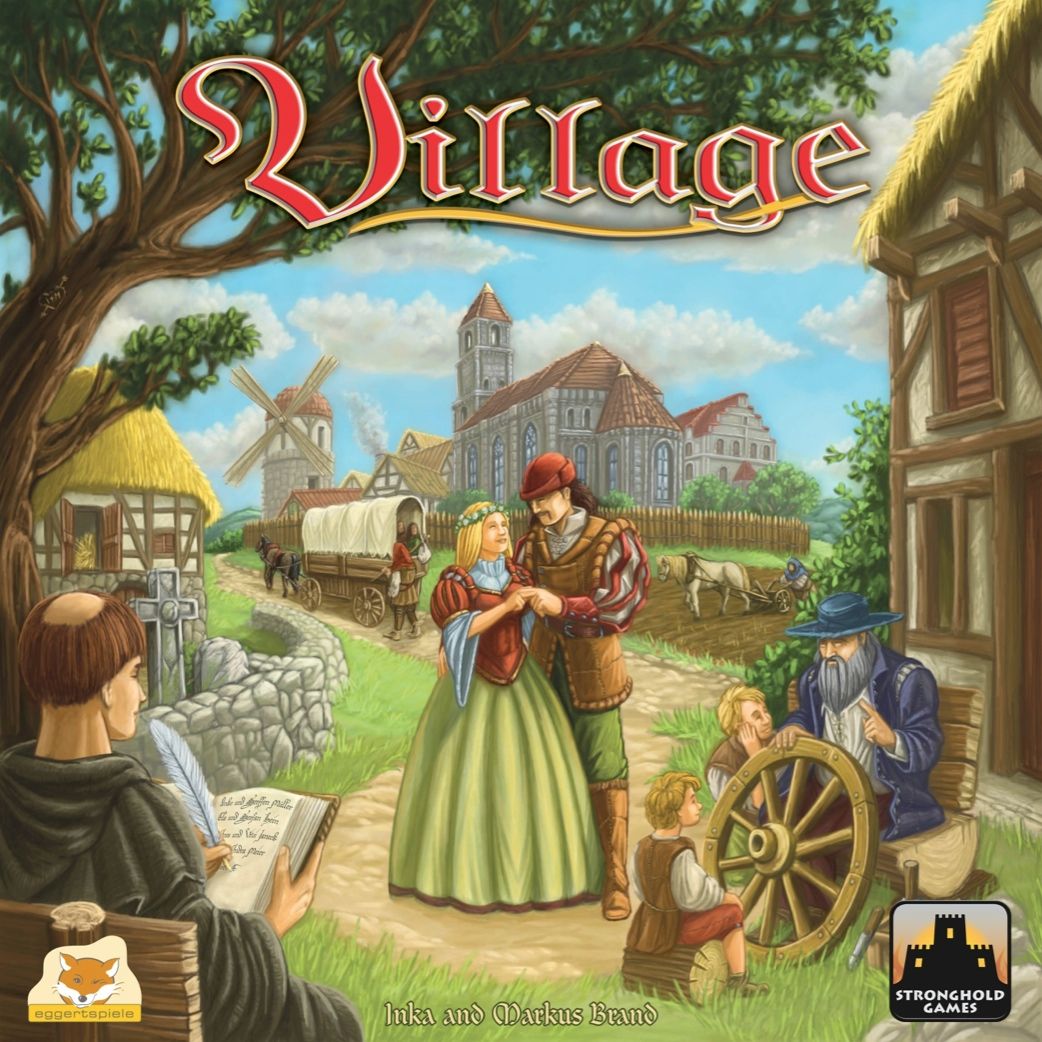



Manual published by the publisher · for rules reference only. More about the game on BoardGameGeek and Ludopedia .
