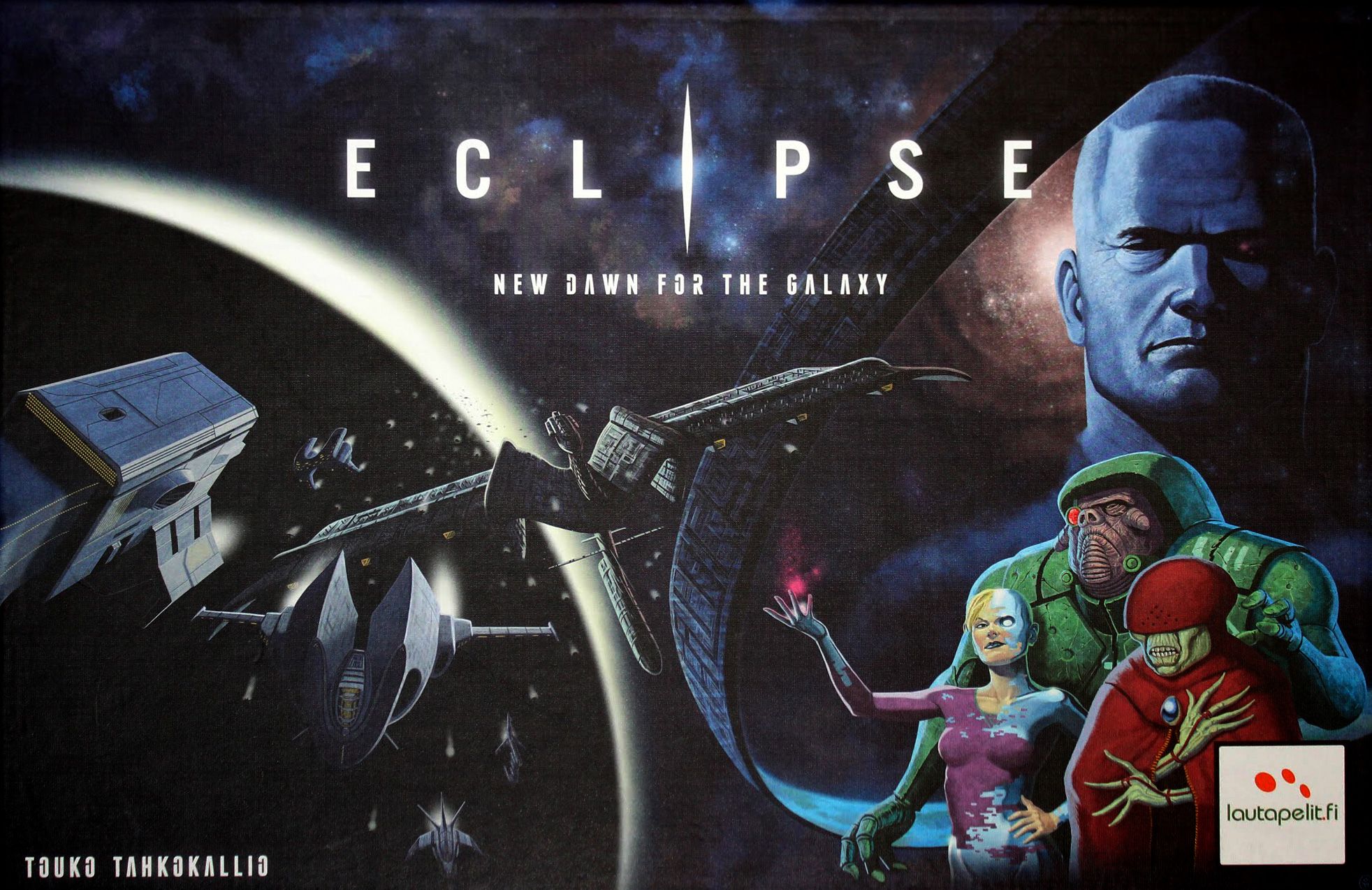
How to Play Eclipse: New Dawn for the Galaxy
Lautapelit.fi, (Self-Published), Asterion Press · Board game · 2011What do you want to do now
Ask anything about Eclipse: New Dawn for the Galaxy: rules, setup, components, complexity, price, or whether it fits your group.
Video: How to Play
Start here, then follow the written guide
Step by step
Game Objective
In Eclipse: New Dawn for the Galaxy, you take control of a vast interstellar civilization competing against rivals for galactic dominance. Your goal is to expand your empire by exploring and colonizing new areas, researching technologies, and building spaceships to wage war. The game ends after 9 rounds, and the player with the most Victory Points wins. Victory Points are earned by controlling galactic sectors, fighting battles, forming diplomatic relations, researching technologies, making discoveries, and controlling Monoliths.
Setup
- Supply Board: Place the Ship Part Tiles and the Round Marker on the Supply Board. Shuffle Technology Tiles in their bag and draw the required amount (2 players: 12, 3: 14, 4: 16, 5: 18, 6: 20) and place them on the Research Tracks. Shuffle Reputation Tiles in their bag. Place Discovery Tiles face down on the Supply Board. Set the Ancient Ship Tiles, Orbital and Monolith Tiles, Damage Cubes, and the Traitor Card on the Supply Board.
- Galactic Center: Place the Galactic Center hex in the middle of the table. Place a Discovery Tile face down on it, with the Galactic Center Defense System Tile (GCDS) on top.
- Sector Hexes: Place Sector hex tiles face down in three stacks: Inner (I), Middle (II), and Outer (III).
- Player Setup: The Starting Player Marker goes to the player who spent the least time on planet Terra. Moving clockwise, each player chooses a Starting Sector hex and a Player Board, placing their hex in the starting spot closest to them in the Middle sector area.
- Player Materials: Each player takes all Ships, Ambassador Tiles, Influence Discs, and Population Cubes of their color, plus 3 Colony Ship Tiles and a Summary Card.
- Board Initialization:
- Place one Influence Disc on each circle of the Influence Track.
- Place one Population Cube on each square of the three Population Tracks (Money, Science, and Materials), leaving the rightmost square empty.
- Place Storage markers on the Storage Track: Money at "2", Science at "3", and Materials at "3".
- Starting Position: On their starting hex, place one Interceptor Ship, one Population Cube on each Population Square (excluding Advanced squares), and one Influence Disc on the Influence circle.
Game Flow
The game is played over 9 rounds. Each game round consists of the following four phases in order:
- Action Phase: Players take turns clockwise. On your turn, you may take one action or pass. The first player to pass receives the Starting Player Marker for the next round.
- Combat Phase: Battles are resolved in descending numerical order of the hexes. The Galactic Center hex is always resolved last.
- Upkeep Phase: Civilization Upkeep costs are paid and Resources are produced.
- Cleanup Phase: Players move Influence Discs from the action spaces back to their Influence Track and new Technology Tiles are drawn.
Actions and How to Play
To take an action, move the rightmost Influence Disc from your Influence Track to the corresponding space on your Action Track. Players who have passed may only perform Reactions.
Standard Actions
- Explore: Choose an unexplored space next to a hex where you have a Ship or Influence Disc. Draw a hex from the corresponding stack (I, II, or III). You may place it (if it connects via Wormholes) or discard it. If placed, you may take control by placing an Influence Disc and collect any Discovery Tile. Ancient Ships or the GCDS must be destroyed before a disc can be placed.
- Influence: Move up to two Influence Discs. You can move them from your Influence Track or another hex to a vacant hex (no disc or enemy ship) adjacent to your own disc/ship via a Wormhole, or back to your Influence Track.
- Research: Pay the Science cost to take a Technology Tile from the Supply Board. Discounts apply based on how many technologies of that category (Military, Grid, or Nano) you already possess, though a minimum cost always applies.
- Upgrade: Modify ship blueprints by returning any number of Ship Part Tiles to the Supply Board and taking up to two new ones. You must have the required technology for certain parts, and the ship's Energy Consumption cannot exceed its Energy Production.
- Build: Pay the Material cost to build up to two Ships (Interceptors, Cruisers, Dreadnoughts, Starbases) or Structures (Orbitals, Monoliths) in a hex where you have an Influence Disc.
- Move: Perform up to three movements. A Ship moves a number of hexes equal to its Movement Value (determined by Propulsores). Ships must move through Wormholes. If a ship enters or leaves a hex with enemy ships, it becomes "pinned" and must stay to engage in combat.
Reactions
After passing, you may perform one Reaction on your turn by placing a disc on the Reaction Track. These are weaker versions of actions: Upgrade (take one part), Build (one ship or structure), or Move (one ship, one movement).
Additional Mechanics
- Colony Ships: At any time during your action, activate Colony Ships (flip them face down) to place Population Cubes from your tracks onto Population Squares in a hex you control.
- Diplomacy: When hexes connect via a full Wormhole, players may form Diplomatic relations by exchanging Ambassador Tiles and a Population Cube. This is broken if one player attacks the other. The attacker receives the Traitor Card.
- Trade: At any time, convert 2 units of one Resource to 1 unit of any other.
End of Game and Scoring
The game ends after 9 rounds. The player with the most Victory Points wins. Victory Points are gained from:
- Controlling galactic sectors.
- Fighting battles (via Reputation Tiles).
- Forming diplomatic relations (Ambassador Tiles).
- Researching technologies.
- Making discoveries (Discovery Tiles kept as VP).
- Controlling Monoliths.
Penalties: The player holding the Traitor Card at the end of the game receives a –2 Victory Point penalty.
Tips for Winning
- Strategic Expansion: Use Colony Ships to colonize Population Squares to increase your production of Money, Science, and Materials, as these are essential for all other actions.
- Technological Edge: Prioritize Research for Ship Part or Build technologies to unlock more powerful ships and Structures like Monoliths for end-game points.
- Mobility Advantage: Research the Wormhole Generator to allow Explore, Influence, and Move actions through hex edges that have a Wormhole on only one side, giving you greater flexibility in movement.
More videos
More rules explanations from the community
In English
-
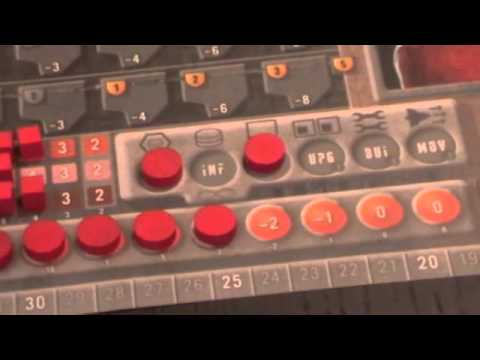 Intro to the player board
-
 How to play Eclipse - Teach the Table
-
 How to Play: Eclipse
-
 Eclipse Rules Explanation & Play-Through
-
 Eclipse: Setting up & sample play
-
 Eclipse: Main Board setup
-
 Eclipse: New Dawn for the Galaxy (Lautapelit.fi) Review & How to Play
-
 Eclipse: Race Intro
-
 Eclipse: Research & upgrades
-
 Eclipse: Race setup
Rules manual
Official PDF file
Frequently Asked Questions
Quick answers about the rules
What is the objective of Eclipse: New Dawn for the Galaxy?
How do you set up Eclipse: New Dawn for the Galaxy?
How do you play Eclipse: New Dawn for the Galaxy?
How does Eclipse: New Dawn for the Galaxy end, and how do you score?
What are some tips for winning Eclipse: New Dawn for the Galaxy?
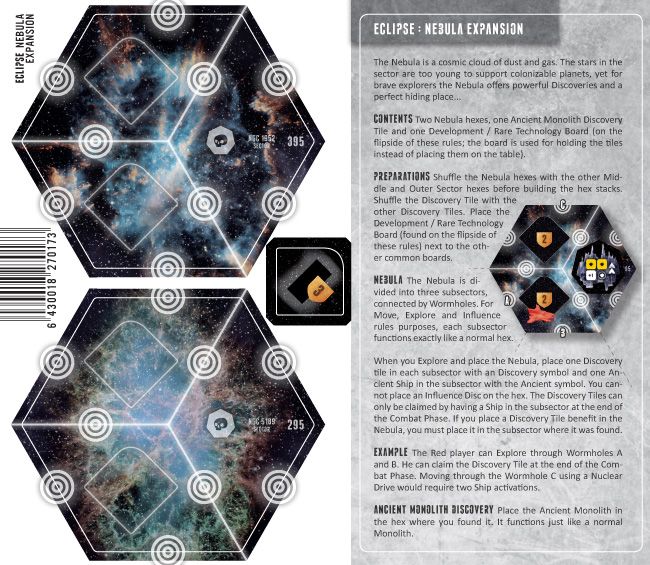
Expansions
Published additional content




Other Games You'll Like
Based on mechanics and theme