Trails of Tucana
Aporta Games, Doit Games, Geekach LLC · Board game · 2019Perfect for those who love quick puzzles and pen-and-paper games with a strategic twist. Its strongest point is the incredible replayability thanks to randomized maps.
- Fast and dynamic gameplay
- Unique maps every session
- Smart route planning
- Very easy to teach
- Luck of the draw influence
- Requires paper and pencil
About the game
What you do in a play session
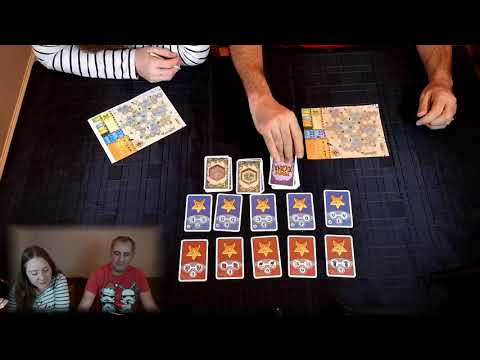
The loop is straightforward: each turn, two terrain cards are revealed. You must then draw a trail between two adjacent spaces on your map that match those terrains. Over time, these lines evolve into a complex road network. You score points by linking matching harbors and connecting sights to those harbors. Being the first to complete a pair of harbors grants you a nice bonus.
The real strategy lies in probability. Not all terrains are created equal; for instance, mountain cards are significantly rarer than desert cards. Trying to forge a path through a mountain range or across water is far more challenging than trekking through a forest. If you plan your routes without considering terrain scarcity, you might find yourself stuck while your opponents breeze ahead. The key is to create flexible paths, maximizing your chances of utilizing whatever combination of cards appears. It's the kind of game that starts fast but leaves you wondering, 'What if I had gone that way?'. Thanks to the variable setup, every session is a unique puzzle, making it perfect for both casual players and optimization enthusiasts.
Gallery
Box and component photos
Tap any photo to open fullscreen. Photos submitted by the community or publisher.
Rules videos
Learn by watching before you open the box


Best player count
BGG community vote
Soundtrack
Ambience suggested by Melodice
Where to Buy
Prices monitored daily
Price history — last 6 months (lowest new offer)
As an Amazon Associate I earn from qualifying purchases. Prices and availability subject to change.
Alert enabled!
Join the BoardGamesBot deals group
Get the best board game deals every day — without message spam.
Join the WhatsApp groupGame details
Mechanics, categories, families and credits
Mechanics
Categories
Families
Community
Data from BoardGameGeek
Frequently Asked Questions
Quick answers before you buy
Is the game complex? Can someone who doesn't play board games join in?
How long does a game take?
Can I play it solo?
Do I need extra materials?
How many players can play?
What happens if I can't draw the line for the revealed card?
Other Games You'll Like
Based on mechanics and theme