
/pic7149798.jpg)
What is your question about 7 Wonders?
Ask before downloading the manual: the assistant was trained on this file and answers instantly, citing the exact page.
Ask questions about the game
Ask anything about 7 Wonders: rules, setup, components, complexity, price, or whether it fits your group.
Write your question first. You will create your free account to see the answer — it takes 20 seconds.
Full rulebook
Browse the manual or download the original PDFFull manual text available to read Open text
DONATE
orderofgamers.com/shop/singleoffering
PATREON
patreon.com/esotericorder
Hello! I’m Peter (‘Universal Head’), and for more than 10 years I’ve been creating these famous rules and references, and bringing you hundreds of entertaining, informative videos about tabletop gaming.
This PDF took a lot of time and hard work to create, so if you find it improves your game experience, please consider a donation so I can continue to make them for you. Even better, regularly support the EOG on Patreon. There’s even a special EOG community on Discord – go to the website and click the link to join!
Labor Lusum Memelio
rat
THE ESOTERIC ORDER OF GAMERS
ORDEROFGAMERS.COM
FOLLOW EOG updates ON ALL THESE PLATFORMS
All the links are at www.orderofgamers.com
DOWNLOAD THE ULTIMATE TABLETOP GAME RULEBOOK APP AT TABLETOPCODEX.COM
---
Game: 7 WONDERS
Publisher: Asmodee (2010)
Page 1: Rules summary front
Page 2: Rules summary back
Page 3: Play reference
v2
Apr 2025
For best results, print at 100% (on double-sided paper), laminate and trim to size.
This rules summary and reference is intended only for the personal use of existing owners of the game and has been
made with the intention of promoting the game and making it easier to play and enjoy. Artwork from the original game
is copyrighted by the publisher and used without permission. The Esoteric Order of Gamers makes no claim whatsoever
to the rights of the publisher and copyright holders, and will remove this PDF from public availability on request.
This PDF may not be re-posted online, sold, or used in any way except for personal use.
Created by Peter Gifford ‘Universal Head’
The Esoteric Order of Gamers | orderofgamers.com
---
SETUP
Depending on the number of players, return to the box all cards not used (see the bottom center of each card).
In the Age III deck, remove the 10 Guilds (purple cards), randomly and secretly keep only the number of players +2 cards, then shuffle them back into the deck.
Shuffle the Age decks. Each deck will have cards equal to 7 x the number of players.
Shuffle the 7 Wonder cards facedown, and deal one to each player. The card and its facing determines the Wonders board, and its side, used by each player. Alternatively, boards can be chosen if all players agree.
Each board represents the Wonder the player can build and, in the upper left, the resource it produces from the start of the game. Each Wonder has several stages, each of which has a construction cost and gives a bonus when finished.
Each player starts with 3 value ‘1’ coins on their board. Remaining coins form the bank (make change as required).
GAME OVERVIEW
A game starts with Age I, continues with Age II, and ends with Age III. At the beginning of each Age, each player is randomly dealt a hand of 7 cards from the appropriate Age deck.
Each Age has 6 game turns. During each turn the players simultaneously put into play 1 card.
Structures
Raw Materials (brown) produce resources.
Manufactured Goods (gray) produce resources.
Civilian Structures (blue) score victory points (VPs).
Scientific Structures (green) score VPs depending on your progress in the 3 scientific fields.
Commercial Structures (yellow) earn coins, produce resource, change commerce rules and may earn VPs.
Military Structures (red) increase your military might.
Guilds (purple) score points according to specific criteria.
Construction
The upper left of a card shows its construction cost (if the area is empty the structure is free).
If a card has a cost in resources, you must produce the corresponding resources and/or buy them from one of your 2 neighbouring cities.
Starting in Age II, some structures may be built either by paying resources as normal, or for free if the player has built the structure indicated in a previous Age.
The lower right of a card may show which structures may be built for free in the following Age due to this card.
Production
The resources of a city are produced by its Wonder board, its brown cards, its gray cards, and some yellow cards.
To build a structure, your city must produce the resources indicated on its card. The resources are not spent during construction; they can be used each turn, for the entire game.
Cards played are never discarded.
Commerce
You may want to build a structure requiring resources you do not produce. If these resources are produced by a neighbouring city (players sitting directly to your left or right) you will be able to purchase the missing resource(s).
Resources you can buy from neighbouring cities are:
• The resources initially produced by the city (the upper left of the player’s Wonder board).
• The resources from its brown cards and gray cards.
Resources produced by some commercial structures (yellow cards) or some Wonders are reserved for their owner.
For each resource bought, you must give 2 coins to the owner of the resource.
Selling a resource to a neighbouring city does not prevent you from using it, during the same turn, for your own purposes.
You may, during the same turn, buy resources from both neighbouring cities. These resources can only be used on the turn they are bought. Players can never refuse to sell resources.
If both cities neighbouring you produce a coveted resource, you are free to purchase from either player.
To buy resources, you must have the coins at the beginning of the turn.
The coins earned through commerce during a turn cannot be used on that turn, only during the next.
Free construction (chains)
Some structures in Age II and Age III have, to the right of their resource cost, the name of a structure of a previous age.
If you have built that structure during a previous Age, you can build the structure for free (without having to pay the resource cost).
1. CHOOSE A CARD
Each player selects a card from their hand and places it facedown in front of them.
A player’s remaining cards are placed facedown between them and the next player, in a direction depending on the Age:
During Age I, cards are passed to the left (clockwise).
During Age II, cards are passed to the right.
During Age III, cards are passed to the left.
2. ACTION
All players perform one of the 3 possible actions simultaneously with their chosen card.
A. BUILD A STRUCTURE
Build the structure represented by the card. You may never build 2 identical structures.
Brown and gray cards are placed beneath one another starting from the upper left corner of the Wonders board.
Other cards are placed faceup in the area in front of your Wonder board, to form your city. Stack your cards by color, leaving the name of each structure visible.
next player in a direction depending on the Age During Age I cards are passed to the left clockwise During Age II cards are passed to the right During Age III cards are passed to the left 2 ACTION All players perform one of the 3 possible actions simultaneously with their chosen card A BUILD A STRUCTURE Build the structure represented by the card You may never build 2 identical structures Brown and gray cards are placed beneath one another starting from the upper left corner of the Wonders board Other cards are placed faceup in the area in front of your Wonder board to form your city Stack your cards by color leaving the name of each structure visible
B. BUILD A STAGE OF YOUR WONDER
To build each stage of your Wonder, use a card of your choice as a construction marker (pay the price shown on the Wonder board and not the one shown on the structure’s card).
Then play the card, facedown, half hidden under the Wonder board to show that this stage of your Wonder is now built.
The card then has no other effect, remains hidden, and is not considered a structure.
The stages of a Wonder must be built in order, from left to right.
Construction of the Wonder is optional.
The 3 stages of a Wonder are not associated with Ages, so multiple Wonder stages may be built in a single Age, and in any Age. Each stage can only built once per game.
C. DISCARD TO GAIN 3 COINS
Discard the card and take 3 coins from the bank.
Discarded cards remain facedown and form a discard pile in the center of the table. If a player cannot build the structure or the Wonder stage, they must discard the card and take 3 coins.
3. MOVE ON TO THE NEXT HAND
Each player takes the hand of cards passed to them from their neighbour.
END OF AN AGE
At the beginning of the sixth and final turn of each Age, players receive a 2 card hand from their neighbour.
Each player then chooses one (as in previous turns) and the second is then discarded, facedown (without getting 3 coins for it). The selected card is played normally, and then the Age ends.
Military conflicts
The players then proceed to the resolution of military conflicts.
Each player compares the total number of shields on their military structures (and on any appropriate built Wonder cards) with the total of each of the 2 neighbouring cities.
• If a player has a higher total than a neighbouring city, that player takes a victory token corresponding to the Age just played (Age I: +1, Age II: +3, or Age III: +5)
• If a player has a lower total than that of a neighbouring city, that player takes a defeat token (-1 VP)
• If a player has an equal total to that of a neighbouring city, no token is taken.
Each player therefore gets 0, 1 or 2 tokens, which are placed on their Wonder board.
END OF THE GAME
The game ends at the end of the Age III, after military conflict tokens have been handed out.
Each player totals their victory points and the player with the highest total is the winner.
If there is a tie, the player with the most coins in their treasury is the winner. A tie on coins is not broken further.
COUNT VICTORY POINTS IN ORDER:
1. Military conflicts
Each player adds their victory and defeat tokens (the total can be negative).
2. Treasury contents
For every 3 coins in their possession at the end of the game, players score 1 CP. Leftover coins score no points.
3. Wonders
Each player adds the VPs from their Wonder.
4. Civilian structures
Each player adds the VPs of their Civilian structures (as indicated on each Civilian structure).
5. Scientific structures
The scientific cards earn VPs from sets of identical symbols and from sets of 3 different symbols. The VPs earned by both methods are cumulative.
---
Sets of identical symbols: For each of the 3 existing scientific symbols, the player wins a number of points equal to the number of identical symbols squared.
There are 4 green cards for each symbol, for a maximum of 16 VPs per family of symbols (this maximum can be increased with the Scientific Guild and the Wonder of Babylon).
Sets of 3 different symbols: For each group of 3 different symbols, each player scores 7 VPs.
6. Commercial structures
Some commercial structures from Age III grant VPs.
7. Guilds
Each Guild is worth a number of VPs depending on the configuration of the player’s city and/or that of the 2 neighbouring cities.
2 PLAYER EXPERT VARIANT
SETUP
Use the same cards as for 3 players. Each player is given a board, and then a third Free City board is placed beside them.
Place the Border card between the players. Each player is dealt a 7 card hand and the remaining 7 cards make a facedown draw pile to the right of the Border card.
The player to the left of the Free City adds the Free City card to their hand.
The players and the Free City each get 3 coins from the bank.
GAME OVERVIEW
The game proceeds as it would with 3 to 7 players, but players must play, in addition to their own card, a card for the Free City.
1. Choose a card
The player who holds the Free City card in their hand takes the first card of the draw pile and adds it to their hand.
They then pick 2 cards from their hand, first one for their own city and then one for the Free City, while their opponent picks a card for themselves. Each player then places their remaining cards on their own side of the Border card.
The Free City cannot discard a card to get 3 coins unless it cannot play a card. The player must then choose, when possible, a card which can be played by the Free City (structure construction or Wonder building stage). The choice of this card is made after choosing the card to be played for their own city.
2. Action
The player holding the Free City card plays the Free City’s card followed by their own while their opponent performs their own action.
The Free City can buy resources from its 2 neighbouring cities according to the normal commerce rules. When a resource is available in both neighbouring cities, the player controlling the Free City gets to pick which city to buy the resource from (no matter what its cost may be).
If the card chosen for the Free City can benefit from a free construction (chain), this free construction must be performed.
During the sixth turn of the age, there is only one card left in the Free City’s draw pile. This last card is discarded at the same time as the seventh and last card of the players.
3. Move on to the next hand
Once all 3 cards are played, the players take the stack of cards on the other side of the border.
During the next turn, the other player will play for the Free City, and so on until the end of the game.
End of an Age
The player who begins with the Free City card changes each age:
Age I: the card is held by the player to the left of the Free City.
Age II: the card is held by the player to the right of the Free City.
Age III: the card is held by the player to the left of the Free City.
The rules for conflict resolution remain unchanged.
END OF THE GAME
The player who has the most VPs wins the game. In case of a tie, the player with the most coins wins the game.
LEADERS EXPANSION
SETUP
Add the 4 new Guilds cards (purple) for Age III to those of the basic game. The rules for the Age III deck (the number of Guilds kept) remains unchanged. Each player starts with 6 coins (instead of 3).
GAME OVERVIEW
The game now starts with a Leader phase, and each Age now starts with a new Recruitment phase.
LEADER PHASE
Each player is dealt a hand of random 4 Leader cards (kept hidden). Return undealt Leaders to the box.
1. Each player secretly chooses 1 card from their 4 and places it in front of themself, facedown. They then hand the 3 remaining cards to the player to their right.
2. Each player secretly chooses 1 card from the 3 received, then hands the 2 remaining cards to the player to their right.
3. Each player secretly chooses 1 card from the 2 received, then hands the remaining card to the player to their right.
4. Each player keeps the card received and adds it to the 3 cards previously chosen.
Each player has a hand of 4 Leaders. Age I now starts.
dealt a hand of random 4 Leader cards kept hidden Return undealt Leaders to the box 1 Each player secretly chooses 1 card from their 4 and places it in front of themself facedown They then hand the 3 remaining cards to the player to their right 2 Each player secretly chooses 1 card from the 3 received then hands the 2 remaining cards to the player to their right 3 Each player secretly chooses 1 card from the 2 received then hands the remaining card to the player to their right 4 Each player keeps the card received and adds it to the 3 cards previously chosen Each player has a hand of 4 Leaders Age I now starts
RECRUITMENT PHASE
During this phase, each player plays 1 of their Leader cards.
All players choose their cards secretly, then they are revealed simultaneously. Leader cards can be played in 3 ways:
a. Recruit the Leader
Pay the coin cost of the Leader (return the coins to the bank) and place the card next to your Wonder board, faceup.
b. Build a stage of a Wonder
Use the Leader card as a construction marker (facedown), paying the cost indicated on the Wonder board (not the one on the Leader card).
This action will rarely be possible during the first Recruitment phase, as the cities will generally not yet have the resources required for the construction of the first stage of their Wonder.
c. Discard the card to gain 3 coins
Discard the card to take 3 coins from the bank and add them to the treasury of your city. Return the discarded Leader card to the box (facedown).
The remaining Leader cards in each player’s hand will be used later: they are placed, facedown, under the recruited Leader.
Once this phase finished, the Age is played normally.
During the Recruitment phase before Age III, each player will have 2 Leader cards. The first is played in one of the 3 ways described above, and the second is returned to the box, facedown.
EXPERT VARIANT FOR 2 PLAYERS
In the 2 player game, the Leaders phase is slightly modified.
Each player gets 4 Leader cards facedown. No Leader is given to the Free City.
The players choose a first card in their hand of 4 and gives the 3 remaining cards to their opponent. They choose a second card, then exchange their hand again, and so on. At the end of this phase, each player has a hand of 4 Leaders.
Play the game according to the rules for 2 players in the base game with addition of the Recruitment phases.
---
AGE I CARDS
Produces this raw resource:
Clay Ore Stone Wood
Produces one of these 2 resources per turn:
Produces these raw manufactured goods:
Glass Loom Papyrus
Worth this number of VPs.
Grants 1 Shield.
Comes into account when counting VPs.
Comes into account when counting VPs.
Comes into account when counting VPs.
Worth this number of coins. Coins are taken from the bank once when the card is played.
Starting on the turn following the one in which this building was constructed, purchase raw materials from the neighbouring city indicated by the arrow for 1 coin instead of 2.
Starting on the turn following the one in which this structure was built, pay the manufactured goods bought from your neighbours 1 coin instead of 2.
AGE II CARDS
Produces 2 units of this raw material.
Grants 2 shields.
Worth 1 coin per brown card built in your city and in the 2 neighbouring cities.
Worth 2 coins per gray card built in your city and in the 2 neighbouring cities.
Each turn, produces a unit of one of these 4 raw materials, of your choice.
Each turn, produces a unit of one of these 3 manufactured goods, of your choice.
AGE III CARDS
Grants 3 shields.
Gives 3 coins per Wonder stage constructed in its home city. At game end, worth 1 VP per Wonder stage built in its home city.
Gives 1 coin per brown card in your city when played. At game end, worth 1 VP for each brown card present in your city.
Gives 2 coins per gray card in your city when played. At game end, worth 2 VP for each gray card present in your city.
Gives 1 coin per yellow card in your city (including itself) when played. At game end, worth 1 VP for each yellow card present in a player’s city.
BOARDS
Once per Age, you may construct a building from your hand for free.
You may play the last card of each Age instead of discarding it: discard it to gain 3 coins or use it in construction of your Wonder.
You may look at all cards discarded since the beginning of the game, pick one and build it for free.
You may, at the end of the game, ‘copy’ a Guild of your choice (purple card), built by one of your 2 neighbouring cities.
GUILDS
Spies Guild: 1 VP for each red card present in both neighbouring cities.
Magistrates Guild: 1 VP for each blue card present in both neighbouring cities.
Workers Guild: 1 VP for each brown card present in both neighbouring cities.
Craftsmans Guild: 2 VP for each gray card present in both neighbouring cities.
Traders Guild: 1 VP for each yellow card present in both neighbouring cities.
Philosophers Guild: 1 VP for each green card present in both neighbouring cities.
Builders Guild: 1 VP for each Wonder stage built in the neighbouring cities and in your own city.
Shipowners Guild: 1 VP for each brown, gray and purple card in your city.
Strategists Guild: 1 VP for each defeat token present in the neighbouring cities.
Scientists Guild: Gain an extra scientific of your choice.
---
Why ask BoardGamesBot
Instead of flipping through the whole manual- Accurate answers Based exactly on this manual, with the source page.
- Save time Find the rule in seconds, without flipping 5 pages.
- Anytime Settle rules mid-game, straight from your phone.
- 100% free Create your free account and start using it now.
How it works
Three steps to the answer- 1 Ask your question Type your question about this game's rules.
- 2 Create your free account Takes 20 seconds — it only saves your history.
- 3 Get the answer The AI finds the exact rule and cites the manual page.
Expansions
Published additional content
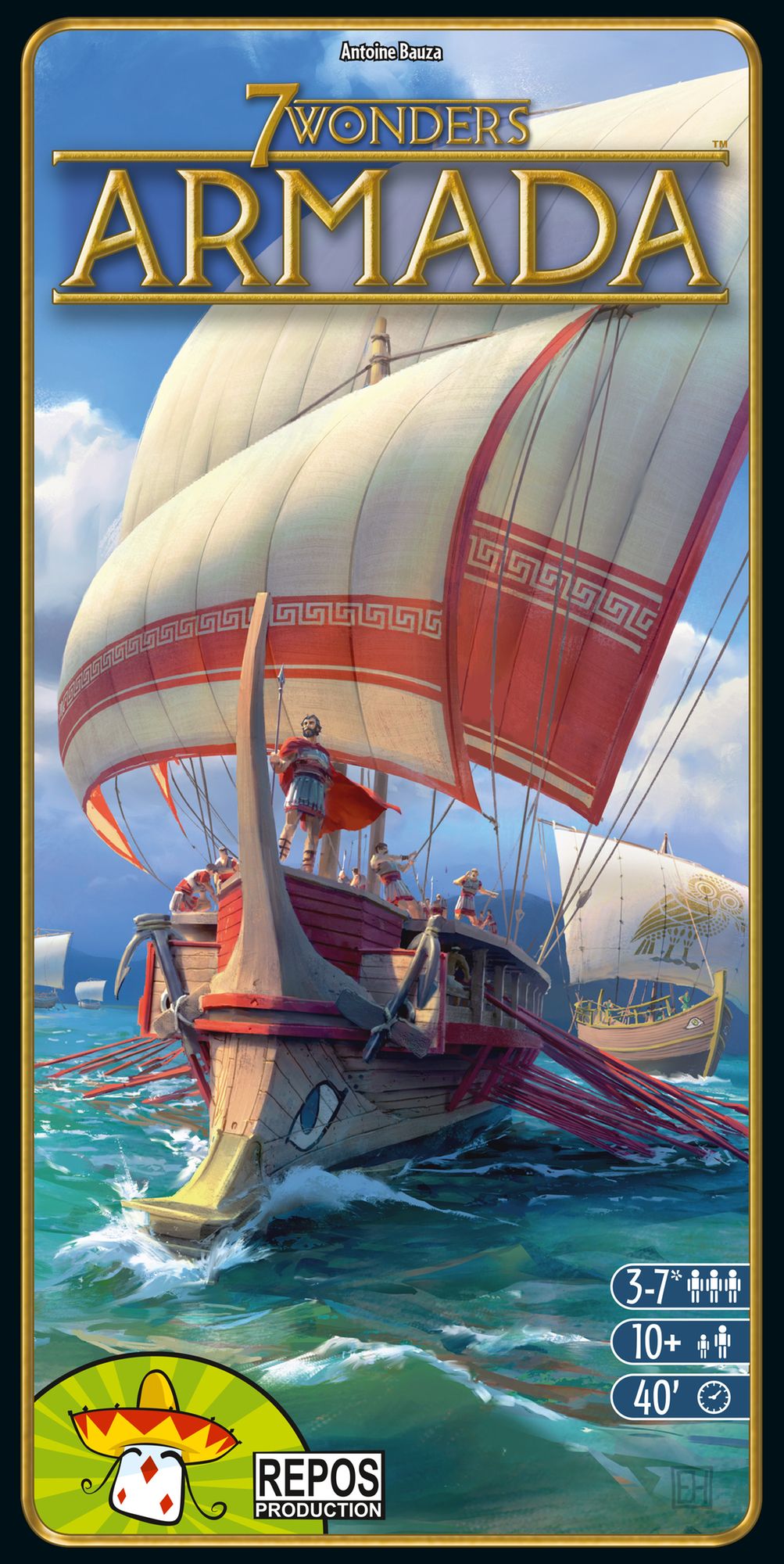 7 Wonders: Armada
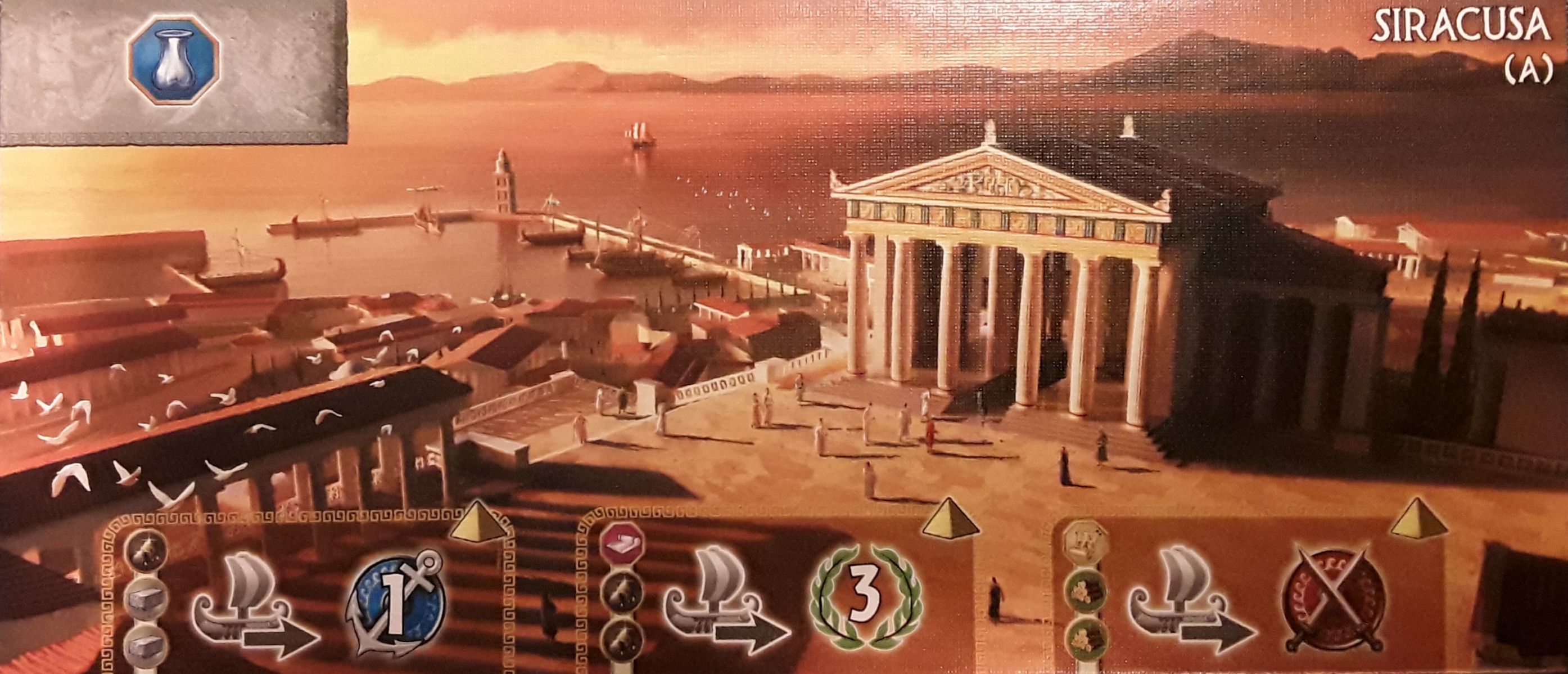 7 Wonders: Armada – Siracusa
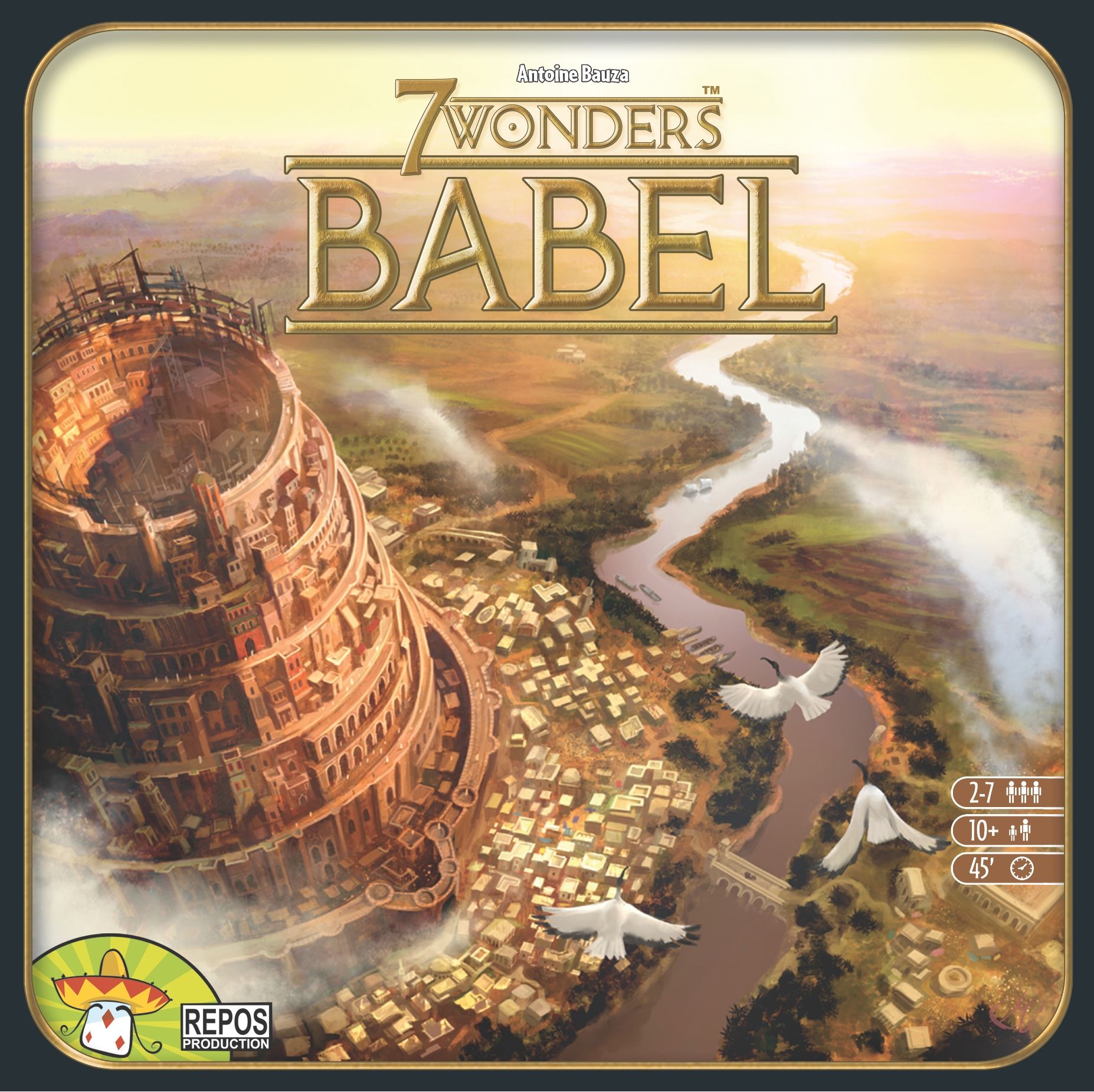 7 Wonders: Babel
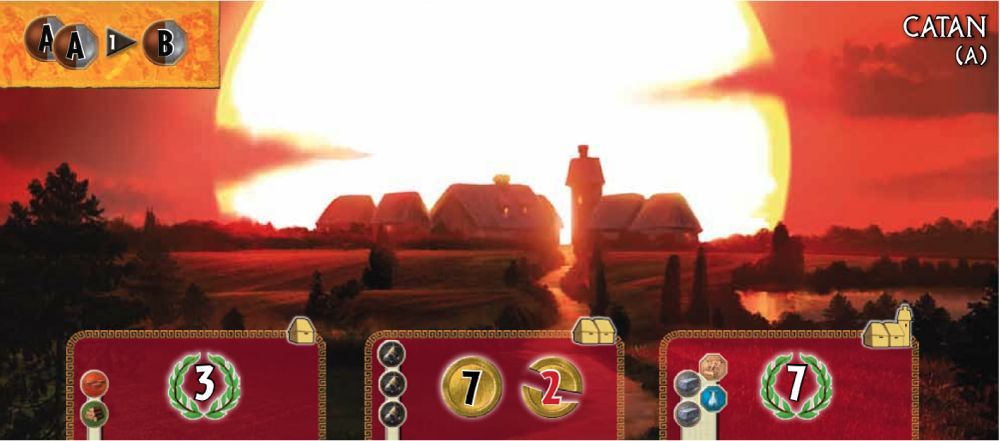 7 Wonders: Catan
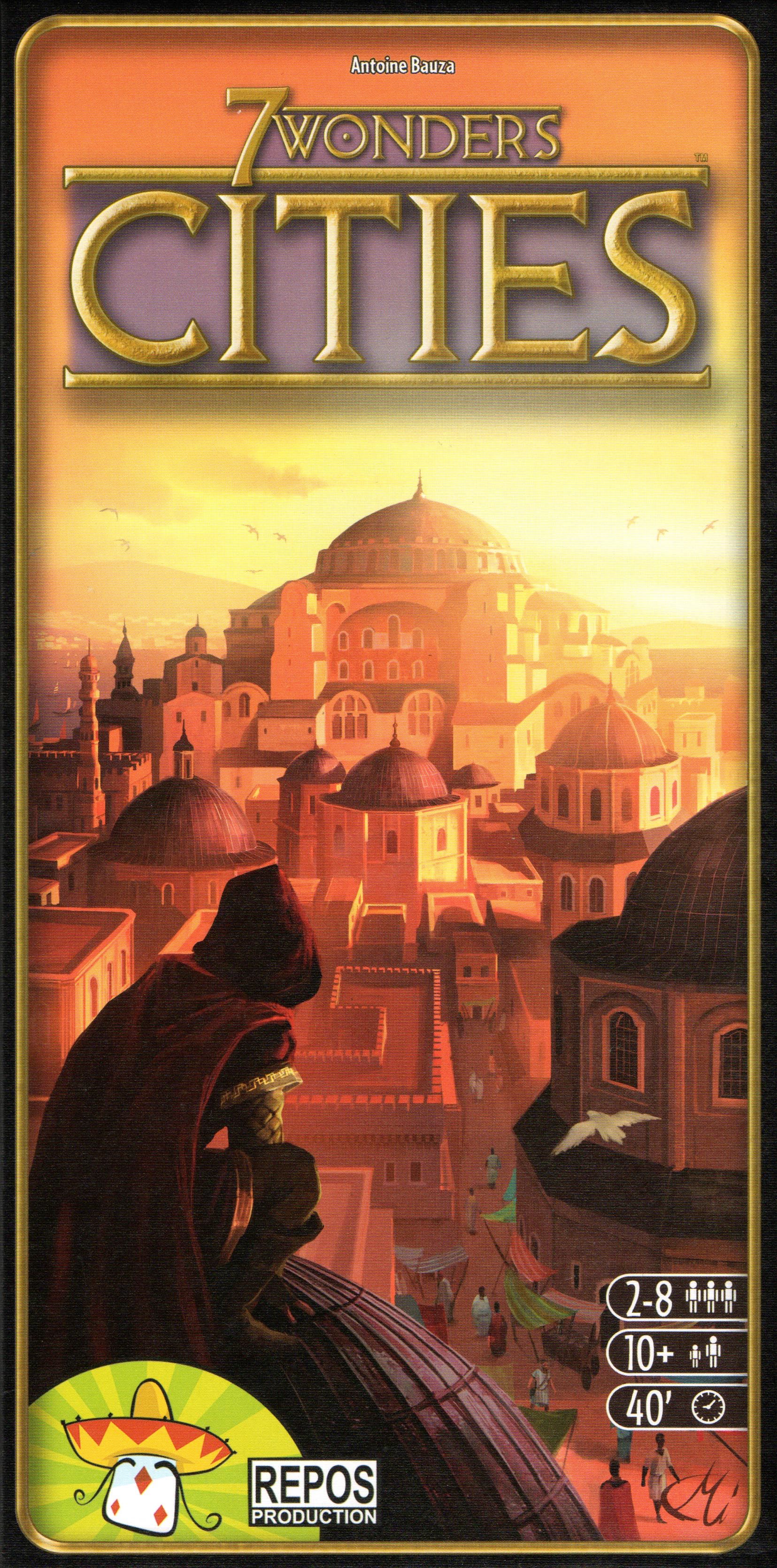 7 Wonders: Cities
 7 Wonders: Cities Anniversary Pack
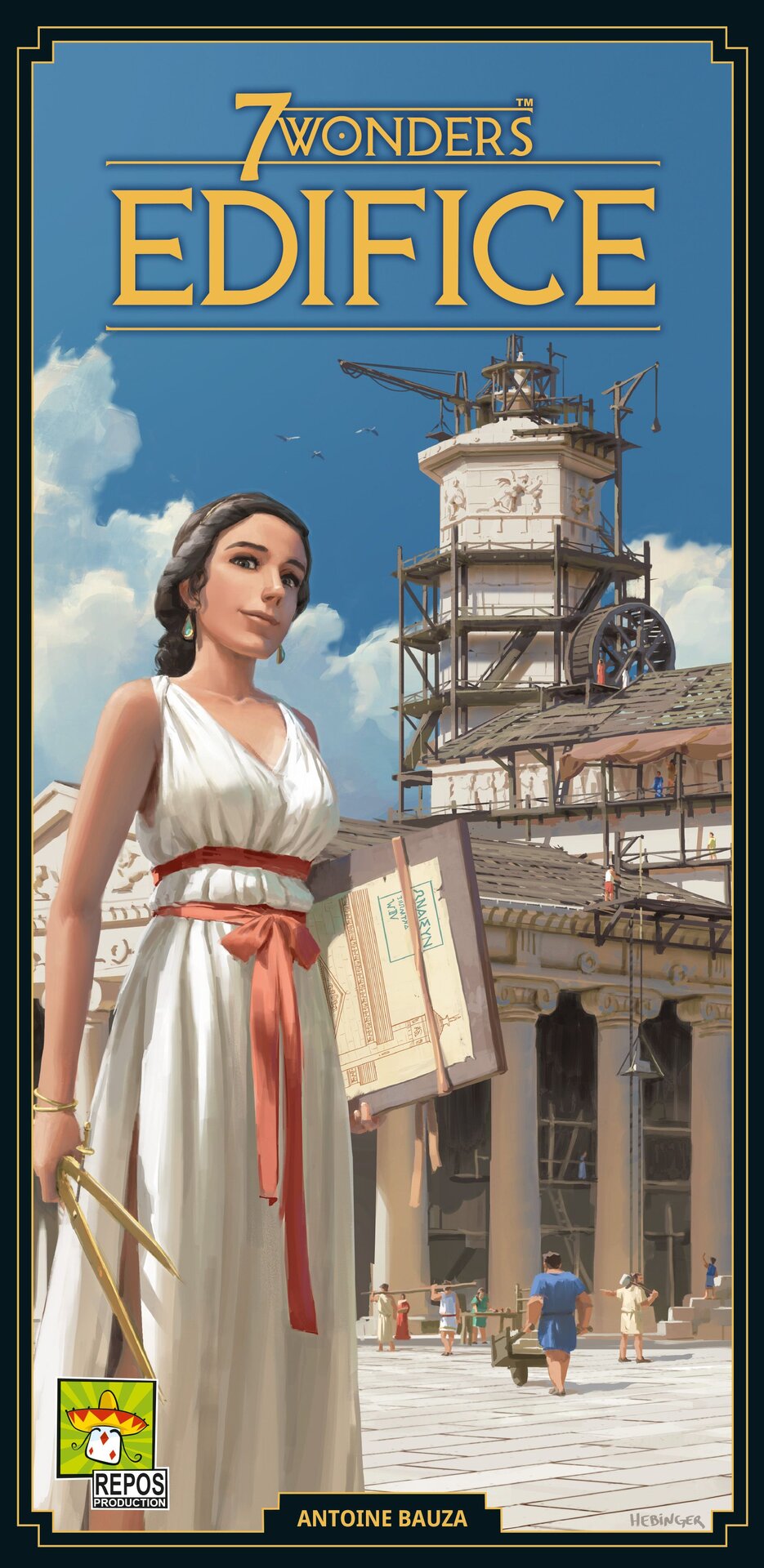 7 Wonders: Edifice
 7 Wonders: Leaders
 7 Wonders: Leaders – Esteban
 7 Wonders: Leaders – Louis
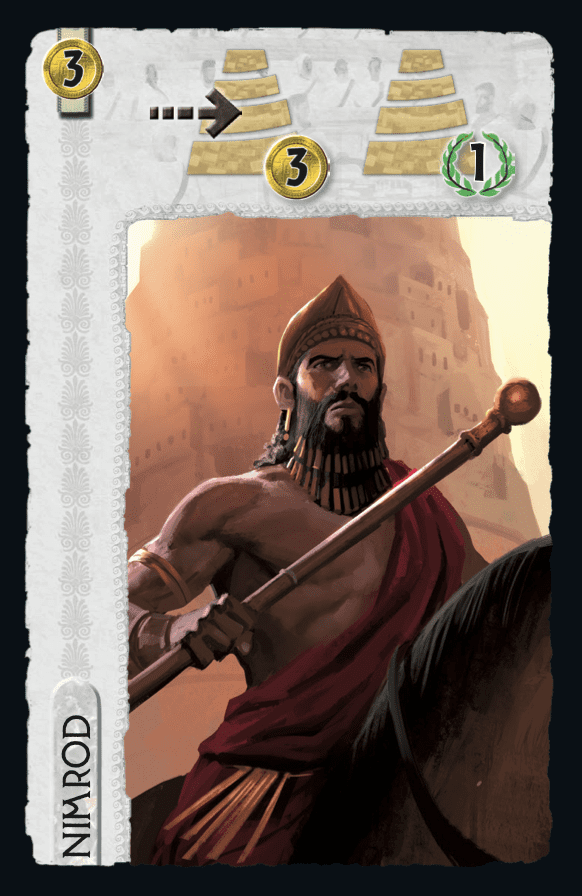 7 Wonders: Leaders – Nimrod
 7 Wonders: Leaders – Stevie
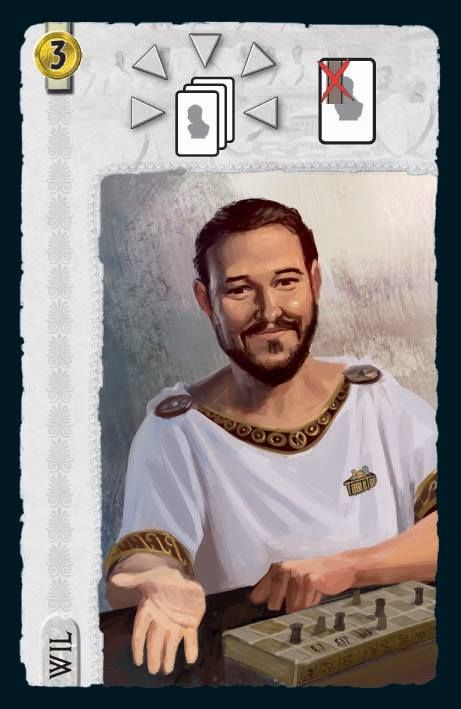 7 Wonders: Leaders – Wil Promo Card
 7 Wonders: Leaders Anniversary Pack
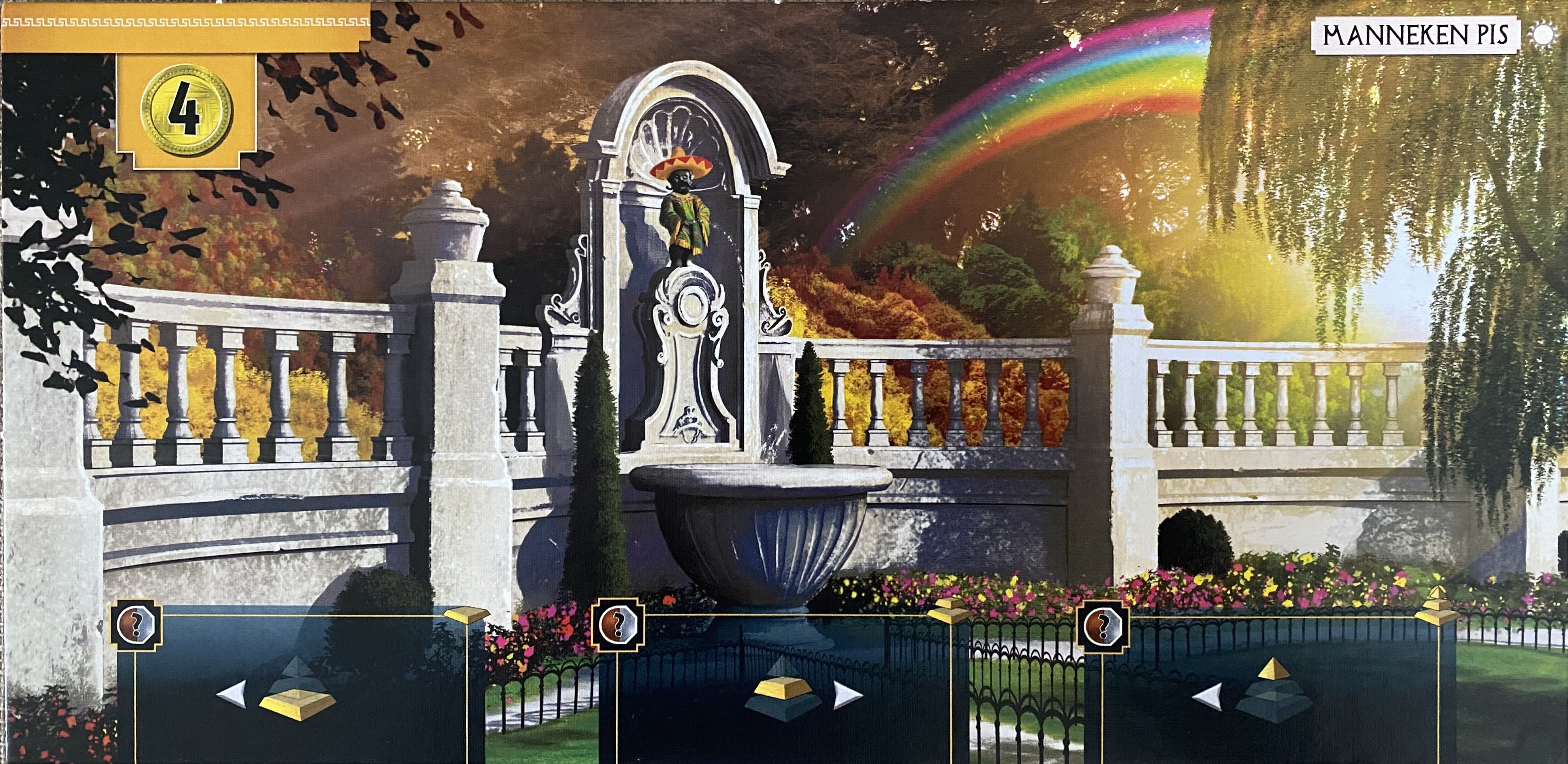 7 Wonders: Manneken Pis
 7 Wonders: Wonder Pack
 Game Wonders (fan expansion for 7 Wonders)
 Lost Wonders (fan expansion for 7 Wonders)
 More Wonders... (fan expansion for 7 Wonders)
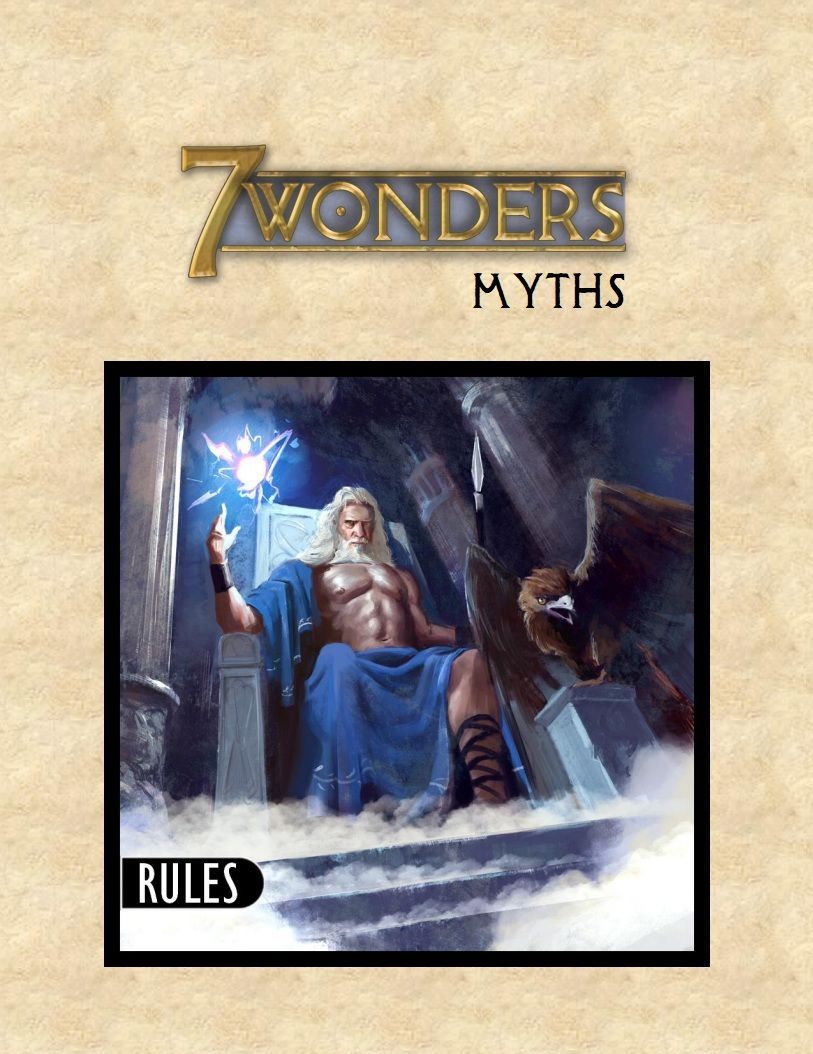 Myths (fan expansion for 7 Wonders)
 Sailors (fan expansion for 7 Wonders)
Other Games You'll Like
Based on mechanics and theme
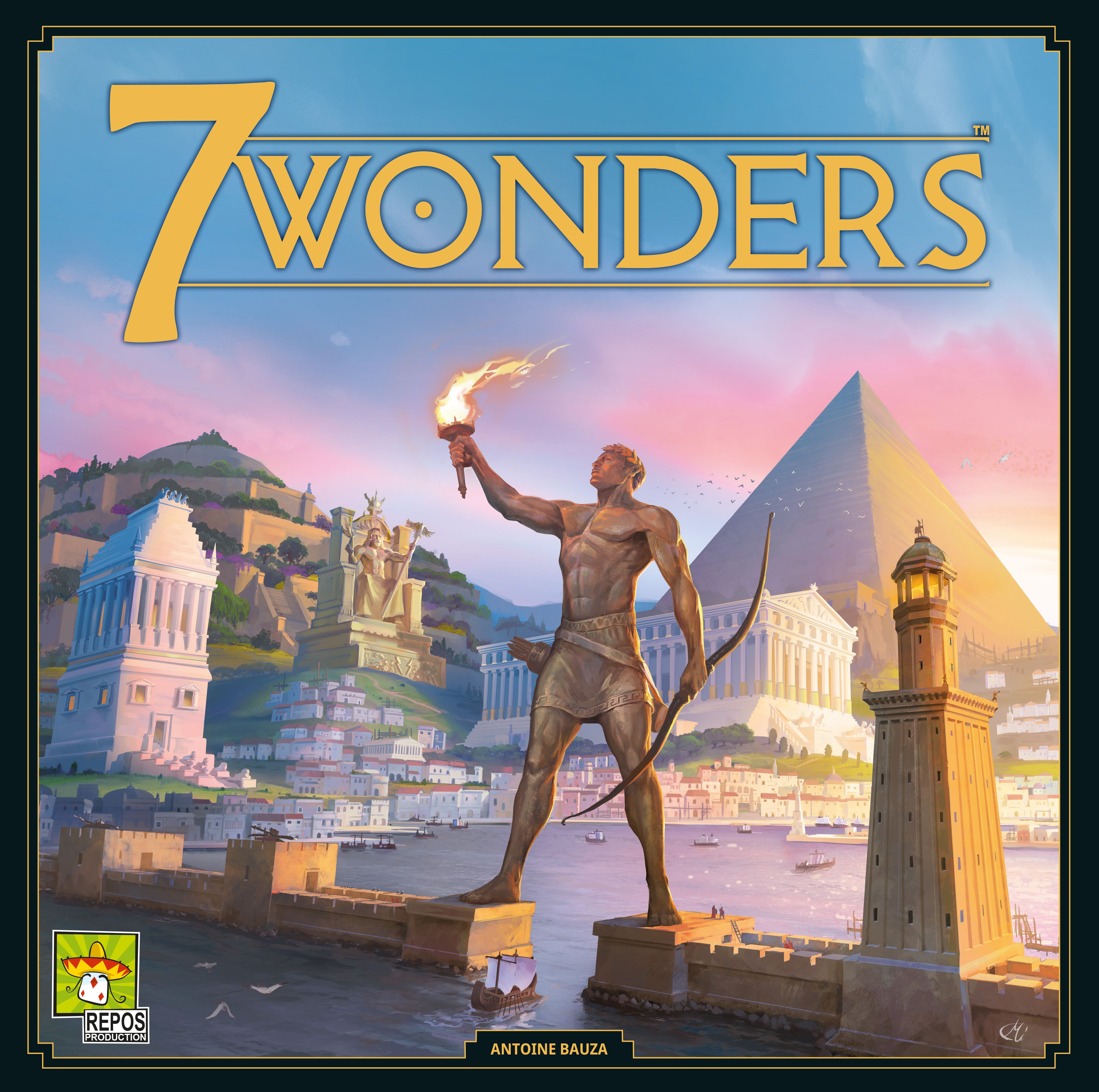
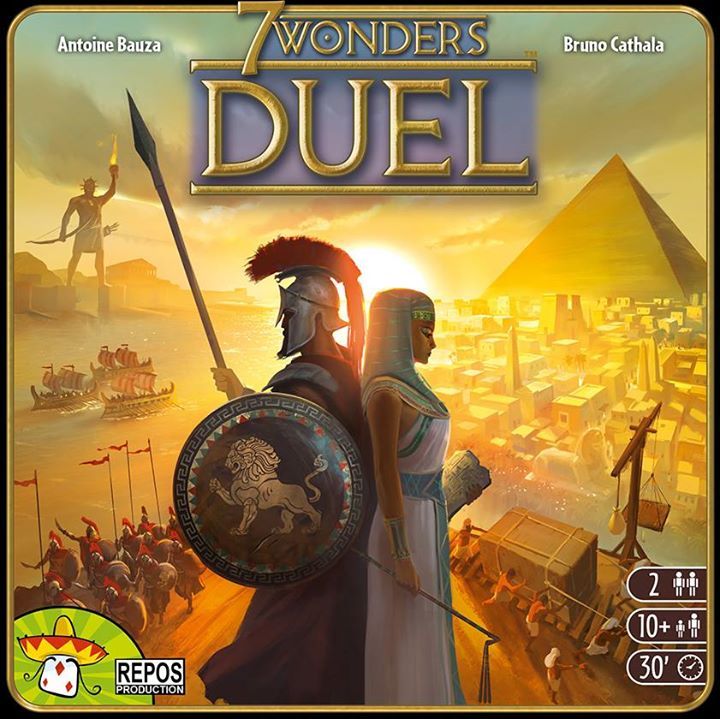



Manual published by the publisher · for rules reference only. More about the game on BoardGameGeek and Ludopedia .
